Saw palmetto
Serenoa repens
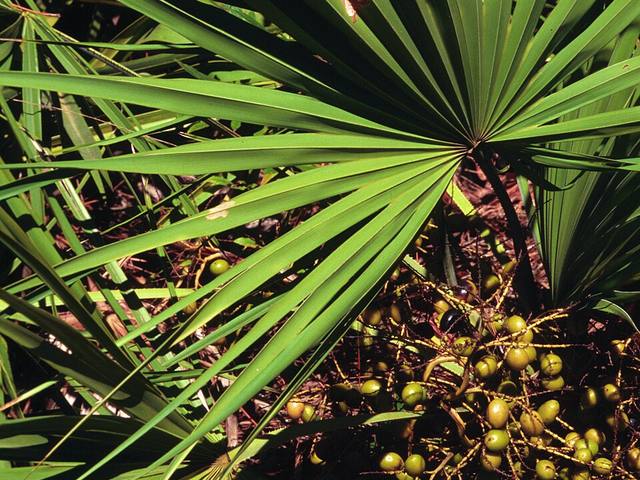
Scrub palm whose black berries fed the Seminole and feed bears; nothing kills it.
Hardiness: zones 8 to 11
Light: full sun to part shade
Size: about 7 ft tall, 8 ft wide
Harvest: September to November
From: SE United States
Here: Too tender to overwinter outdoors on the Lake Erie shore (zone 6b to 7a): grow it in a pot and bring it in, or treat it as an annual.
Good for: food, pollinators, wildlife.
Native to: Southeast. Hardy in zones 8 to 11.
The story
Saw palmetto berries fed the Timucua and Seminole and the bears of Florida; Seminole families used the fronds for chickee roofs, baskets and fans. The berries became a 19th-century patent tonic and are still sold for prostate health, and the wild harvest employs thousands each autumn.
Planting
Full sun or part shade, sand, drought, flood, fire; it tolerates everything and is nearly impossible to kill or move. Plant small in spring.
Growing
Nothing. Trim old fronds if you like. It lives for centuries.
Harvest and use
Berries ripen black in late summer; strong, soapy flavour that an early Quaker compared to rotten cheese. Dry for tea or tincture; the heart of young plants is edible but kills the plant.
What to watch for
Nothing serious; the serrated stems cut hands.
See if Saw palmetto fits your yard
Free planner: enter your ZIP for frost dates, climate fit and a sowing calendar. No account, no ads, no tracking cookies.
More native and wild plants
General guidance, not professional advice. Conditions vary by yard and year; for local specifics ask your county extension office. Never eat a wild plant you cannot identify with certainty. Traditional uses are shared as history, not medical advice. © 2026 Sean Priest · Irie Orchard. Terms & credits · Privacy · Home