Riverbank grape
Vitis riparia
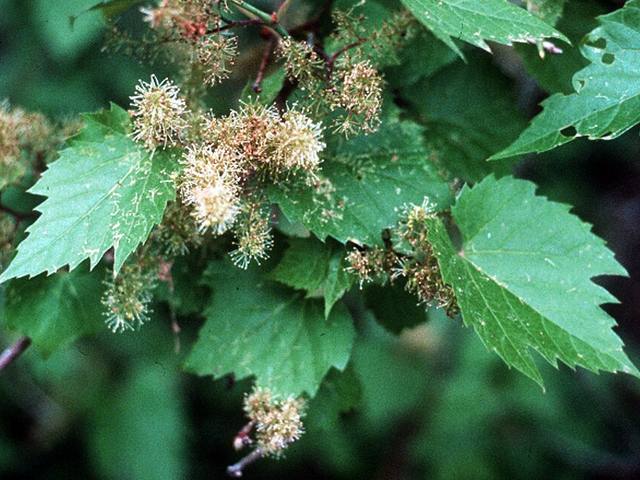
The hardiest wild grape: small, tart berries for jelly and juice, and cover for birds.
Hardiness: zones 2 to 8
Light: full sun to part shade
Size: about 30 ft tall, 10 ft wide
Harvest: September to October
From: North America
Here: Hardy in the Lake Erie shore climate (zone 6b to 7a), so it can live outdoors in the ground.
Good for: food, wildlife.
Native to: Northeast, Southeast, Midwest & Great Lakes, Great Plains & Texas, Rockies & Great Basin, Eastern Canada, Western Canada. Hardy in zones 2 to 8.
The story
Riverbank grape grows along streams across North America and was eaten fresh and dried by Haudenosaunee, Dakota and Anishinaabe people, its leaves used to wrap food; its rootstock saved Europe's vineyards from phylloxera in the 1870s, and it survives -50°F.
Planting
Full sun or part shade, moist to average soil, and a fence, tree or arbor; plant in spring. Male and female vines, so plant two or three.
Growing
Water the first year, then nothing. Prune hard in late winter to keep it in bounds; it grows 20 feet a year.
Harvest and use
Small tart grapes ripen blue-black in early autumn; jelly, juice and wine. Leaves in early summer for dolmas.
What to watch for
Japanese beetles and its own vigour.
See if Riverbank grape fits your yard
Free planner: enter your ZIP for frost dates, climate fit and a sowing calendar. No account, no ads, no tracking cookies.
More native and wild plants
- Holm oak (bellota oak)
- Mediterranean hackberry (nettle tree)
- Mastic (lentisk)
- Prickly wild rose
- Common hawthorn
- Black alder
General guidance, not professional advice. Conditions vary by yard and year; for local specifics ask your county extension office. Never eat a wild plant you cannot identify with certainty. Traditional uses are shared as history, not medical advice. © 2026 Sean Priest · Irie Orchard. Terms & credits · Privacy · Home