Sassafras
Sassafras albidum
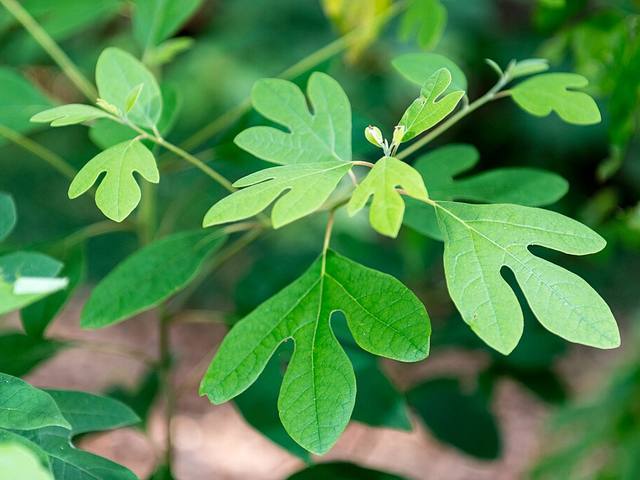
Mitten-shaped leaves dried for filé powder; host of the spicebush swallowtail. Suckers into a grove.
Hardiness: zones 4 to 9
Light: full sun to part shade
Size: about 40 ft tall, 25 ft wide
From: E. North America
Here: Hardy in the Lake Erie shore climate (zone 6b to 7a), so it can live outdoors in the ground.
Good for: wildlife, butterfly and moth caterpillars, pollinators.
Native to: Northeast, Southeast, Midwest & Great Lakes, Great Plains & Texas, Eastern Canada. Hardy in zones 4 to 9.
The story
Sassafras wears three shapes of leaf on one tree: an oval, a mitten and a three-fingered glove. In 1603 ships sailed from England just to load its bark. Choctaw cooks dried and ground the young leaves into filé, the powder that thickens gumbo.
Planting
Sun or part shade and acid, well-drained soil. It has a long taproot, so plant it small.
Growing
It suckers from the roots. Mow around it for a single tree, or let it make a grove.
Harvest and use
Dried spring leaves for filé; fall color in orange, scarlet and purple; blue fruit for birds; and food for spicebush swallowtail caterpillars.
What to watch for
Laurel wilt in the Southeast. Root-bark oil is restricted in food, so stay with the leaves.
Safety
The root bark contains safrole, which the FDA banned as a food additive because it caused liver cancer in lab animals. Don't make root tea. Filé powder from dried leaves holds very little safrole.
See if Sassafras fits your yard
Free planner: enter your ZIP for frost dates, climate fit and a sowing calendar. No account, no ads, no tracking cookies.
More native and wild plants
General guidance, not professional advice. Conditions vary by yard and year; for local specifics ask your county extension office. Never eat a wild plant you cannot identify with certainty. Traditional uses are shared as history, not medical advice. © 2026 Sean Priest · Irie Orchard. Terms & credits · Privacy · Home