Garlic
Allium sativum
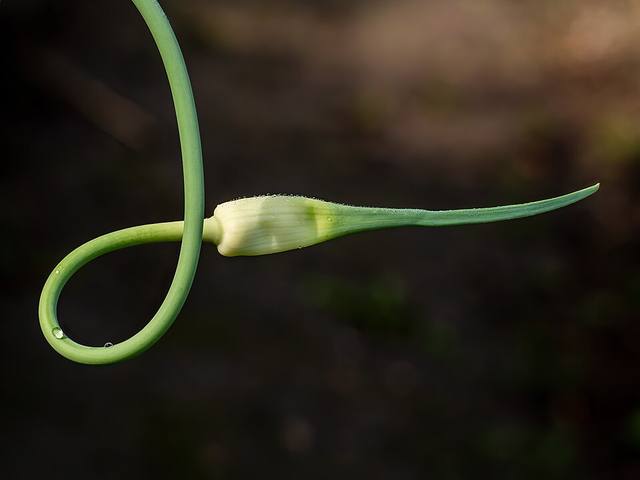
Plant in fall, harvest in midsummer.
Hardiness: zones 3 to 9
Light: full sun
Size: about 1.5 ft tall, 0.5 ft wide
Harvest: July
From: Central Asia
Drought-hardy once established
Here: Hardy in the Lake Erie shore climate (zone 6b to 7a), so it can live outdoors in the ground.
Good for: food, traditional use, Ayurvedic tradition.
Native to: Central Asian steppe. Hardy in zones 3 to 9.
The story
Garlic came out of the mountains of Central Asia and has travelled with people for at least five thousand years. The builders of the pyramids were paid partly in it, and it has been planted in fall and pulled in midsummer ever since.
Planting
Break a bulb into cloves in October and push each one 2 inches deep, pointed end up, 6 inches apart, in loose rich soil and full sun. Mulch with straw or leaves.
Growing
Water in dry springs and keep the weeds down; garlic hates competition. On hardneck kinds, snap off the curly flower stalks in June so the bulb gets the energy.
Harvest and use
Eat the scapes. Lift the bulbs when the lower third of the leaves has browned, cure them in airy shade for two weeks, then store cool and dry. Save your biggest bulbs to replant.
What to watch for
Wet soil rots it. Don't plant where onions or garlic grew the year before.
Safety
Medicinal uses here are shared as history, not advice. Kitchen amounts are fine for most people, but teas, tinctures and supplements can interact with medicines and aren't safe for everyone, especially in pregnancy, while breastfeeding, for children, or with liver or kidney problems. Ask a doctor or pharmacist before taking any plant as medicine.
See if Garlic fits your yard
Free planner: enter your ZIP for frost dates, climate fit and a sowing calendar. No account, no ads, no tracking cookies.
More perennial vegetables, greens and herbs
General guidance, not professional advice. Conditions vary by yard and year; for local specifics ask your county extension office. Never eat a wild plant you cannot identify with certainty. Traditional uses are shared as history, not medical advice. © 2026 Sean Priest · Irie Orchard. Terms & credits · Privacy · Home