Walking onion
Allium × proliferum
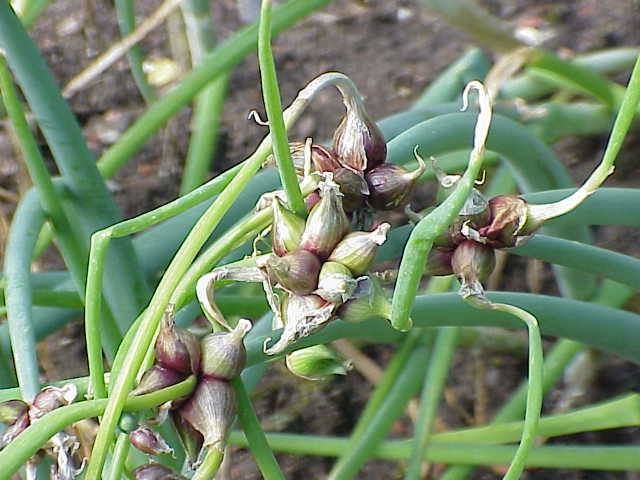
Plants itself by toppling over.
Hardiness: zones 3 to 9
Light: full sun to part shade
Size: about 2.5 ft tall, 1 ft wide
Harvest: April to October
From: Garden hybrid
Drought-hardy once established
Here: Hardy in the Lake Erie shore climate (zone 6b to 7a), so it can live outdoors in the ground.
Good for: food.
Hardy in zones 3 to 9.
The story
The walking onion is a natural cross between the common onion and the Welsh onion. Instead of flowers it grows a cluster of little bulbs at the top of each stalk; the stalk bends under the weight, the bulbs root where they land, and the plant has taken one step across your garden.
Planting
Set topsets or divisions an inch deep in sun or light shade, in any soil that drains. Fall or spring both work.
Growing
Nothing to do but divide the clumps every few years and decide how far you will let it walk.
Harvest and use
Cut green shoots almost all year, pull shallot-like bulbs from the base in summer, and pickle the small topsets. It is often the first fresh green of spring.
What to watch for
It wanders. Pick up the topsets you don't want.
See if Walking onion fits your yard
Free planner: enter your ZIP for frost dates, climate fit and a sowing calendar. No account, no ads, no tracking cookies.
More perennial vegetables, greens and herbs
General guidance, not professional advice. Conditions vary by yard and year; for local specifics ask your county extension office. Never eat a wild plant you cannot identify with certainty. Traditional uses are shared as history, not medical advice. © 2026 Sean Priest · Irie Orchard. Terms & credits · Privacy · Home