Haskap (honeyberry)
Lonicera caerulea
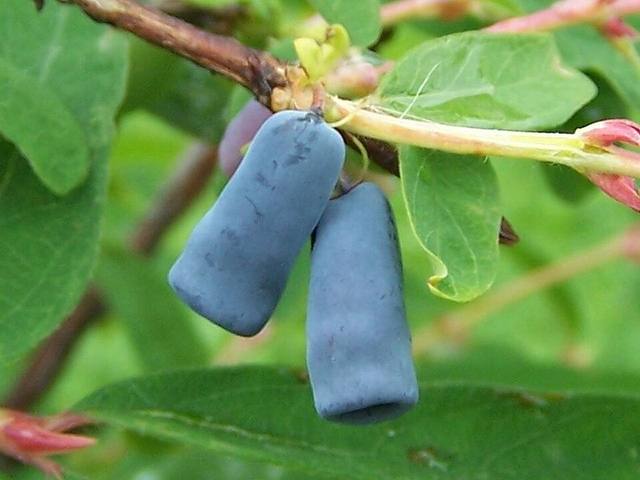
The first fruit of summer, before strawberries.
Hardiness: zones 2 to 7
Light: full sun to part shade
Size: about 5 ft tall, 5 ft wide
Harvest: June
From: Siberia and Japan
Here: Hardy in the Lake Erie shore climate (zone 6b to 7a), so it can live outdoors in the ground.
Good for: food, pollinators.
Native to: Northern Europe & the taiga, East Asia, Japan & its islands. Hardy in zones 2 to 7.
The story
Haskap, a blue honeysuckle, has been gathered by the Ainu of Hokkaido for centuries, who called it the fruit of long life, and by Siberian villagers who made it into jam and vodka. Canadian breeders at the University of Saskatchewan made it a prairie crop in the 2000s.
Planting
Full sun in cool climates, part shade where summers are hot; any decent drained soil. Plant two different varieties; it is among the first shrubs to flower, in very early spring.
Growing
Water in dry spells, mulch, and prune out a few old stems each winter after the fifth year. It is very hardy and nearly carefree.
Harvest and use
The first fruit of the year, before strawberries; the berries look ripe before they are, so wait until the inside is purple, not green. Eat fresh or make jam.
What to watch for
Birds, which strip it; net early. Leaf mildew in late summer is cosmetic.
See if Haskap (honeyberry) fits your yard
Free planner: enter your ZIP for frost dates, climate fit and a sowing calendar. No account, no ads, no tracking cookies.
More berries and small fruit
General guidance, not professional advice. Conditions vary by yard and year; for local specifics ask your county extension office. Never eat a wild plant you cannot identify with certainty. Traditional uses are shared as history, not medical advice. © 2026 Sean Priest · Irie Orchard. Terms & credits · Privacy · Home