Washington hawthorn
Crataegus phaenopyrum
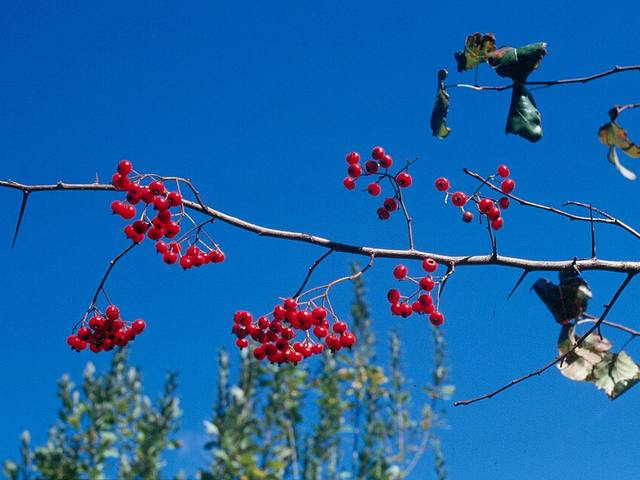
Red berries hang on into winter for the birds. Thorny, so plan the path.
Hardiness: zones 4 to 8
Light: full sun
Size: about 25 ft tall, 25 ft wide
Harvest: September to November
From: SE United States
Drought-hardy once established
Here: Hardy in the Lake Erie shore climate (zone 6b to 7a), so it can live outdoors in the ground.
Good for: wildlife, pollinators, butterfly and moth caterpillars.
Native to: Southeast, Midwest & Great Lakes. Hardy in zones 4 to 8.
The story
Washington hawthorn got its name in the early 1800s, when it was carried north from the city of Washington to Pennsylvania to be planted as living fence. The thorns kept cattle in long before barbed wire.
Planting
Full sun and any well-drained soil. It takes city conditions and drought.
Growing
Prune in winter to lift the lower branches, wearing thick gloves. Otherwise leave it alone.
Harvest and use
White flowers in June, orange fall color, and red berries that hang on until cedar waxwings find them in late winter. Dense thorny branches make safe nesting sites.
What to watch for
Thorns up to three inches long. Keep it away from paths and play areas.
See if Washington hawthorn fits your yard
Free planner: enter your ZIP for frost dates, climate fit and a sowing calendar. No account, no ads, no tracking cookies.
More native and wild plants
General guidance, not professional advice. Conditions vary by yard and year; for local specifics ask your county extension office. Never eat a wild plant you cannot identify with certainty. Traditional uses are shared as history, not medical advice. © 2026 Sean Priest · Irie Orchard. Terms & credits · Privacy · Home