Khejri
Prosopis cineraria
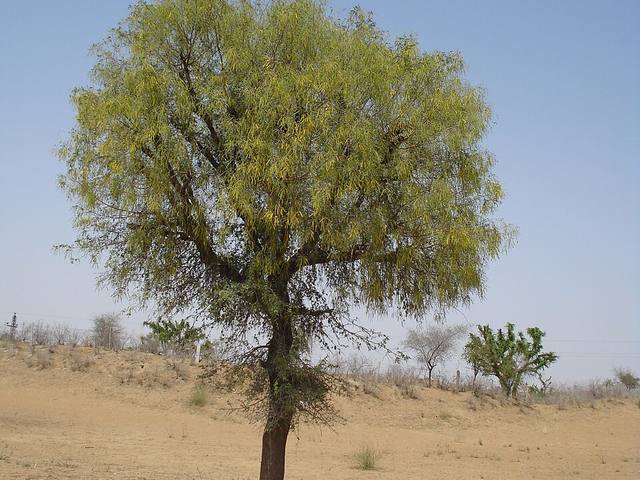
The tree of life of Rajasthan: sangri pods for curry, lopped leaves for goats, shade for the field.
Hardiness: zones 10 to 12
Light: full sun
Size: about 30 ft tall, 25 ft wide
Harvest: April to May
From: Thar Desert
Here: Too tender to overwinter outdoors on the Lake Erie shore (zone 6b to 7a): grow it in a pot and bring it in, or treat it as an annual.
Good for: food, fixing nitrogen in the soil, wildlife.
Native to: Sahara & Arabian deserts, South & Southeast Asian tropics. Hardy in zones 10 to 12.
The story
Khejri is the tree of life of the Thar Desert and the state tree of Rajasthan; in 1730 the Bishnoi people of Khejarli gave 363 lives to stop it being felled, and their villages still protect it. Its pods are the sangri of Marwari cooking, its leaves feed goats and camels, and its shade shelters millet.
Planting
Full sun, sand, heat, drought, and no frost; it fixes nitrogen and sends roots 100 feet down. Plant seed in place in the desert; slow, to 30 feet.
Growing
Water the first two summers, then never. Lop the branches each winter for fodder, as Rajasthani farmers do; it regrows.
Harvest and use
Pick green pods in late spring and dry them for sangri; cook in ker-sangri with ker berries and chiles. The dried pods keep for years.
What to watch for
Wet soil, frost, and the recent dieback in Rajasthan from overpumped groundwater.
See if Khejri fits your yard
Free planner: enter your ZIP for frost dates, climate fit and a sowing calendar. No account, no ads, no tracking cookies.
More fruit trees
- Paper mulberry (aute)
- Date-plum (Caucasian persimmon)
- Kei apple
- Ume (Japanese apricot)
- Tejocote (Mexican hawthorn)
- Waterberry (umdoni)
General guidance, not professional advice. Conditions vary by yard and year; for local specifics ask your county extension office. Never eat a wild plant you cannot identify with certainty. Traditional uses are shared as history, not medical advice. © 2026 Sean Priest · Irie Orchard. Terms & credits · Privacy · Home