Lilly pilly
Syzygium smithii
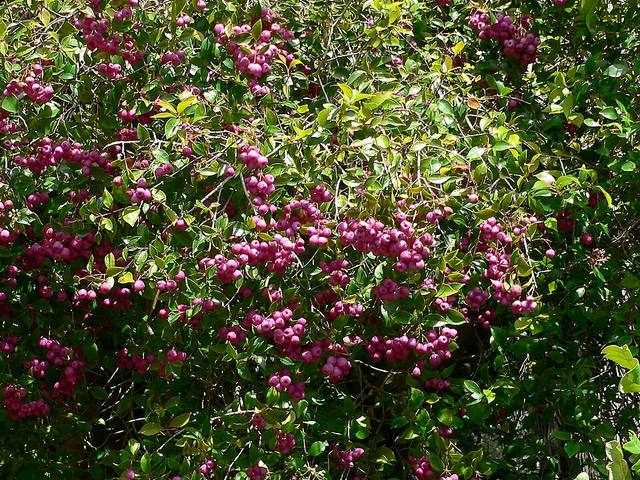
Crunchy, apple-tasting pink berries on a dense, clippable hedge.
Hardiness: zones 9 to 11
Light: part shade to full sun
Size: about 30 ft tall, 15 ft wide
Harvest: December to March
From: Eastern Australia
Here: Too tender to overwinter outdoors on the Lake Erie shore (zone 6b to 7a): grow it in a pot and bring it in, or treat it as an annual.
Good for: food, wildlife.
Native to: Australia. Hardy in zones 9 to 11.
The story
Lilly pilly fruit was gathered by Aboriginal peoples along the whole east coast of Australia and was one of the first native fruits settlers made into jam; the pink and purple berries are now a bush-food crop and the tree a hedge in every suburb.
Planting
Full sun or part shade, moist drained soil, and a frost-light climate. Plant in spring; evergreen, 10 to 30 feet depending on the kind.
Growing
Water through dry spells and mulch. Clip as a hedge; it responds well. Feed lightly.
Harvest and use
Berries ripen pink to purple in summer and autumn; tart-sweet with a clove note. Jam, cordial and sauces.
What to watch for
Psyllids pimpling the leaves on some species; choose resistant ones.
See if Lilly pilly fits your yard
Free planner: enter your ZIP for frost dates, climate fit and a sowing calendar. No account, no ads, no tracking cookies.
More berries and small fruit
- Midyim
- Golden currant (clove currant)
- Dog rose
- Andean blueberry (mortiño)
- Andean elderberry (sauco)
- Atherton raspberry
General guidance, not professional advice. Conditions vary by yard and year; for local specifics ask your county extension office. Never eat a wild plant you cannot identify with certainty. Traditional uses are shared as history, not medical advice. © 2026 Sean Priest · Irie Orchard. Terms & credits · Privacy · Home