Magellan currant (parrilla)
Ribes magellanicum
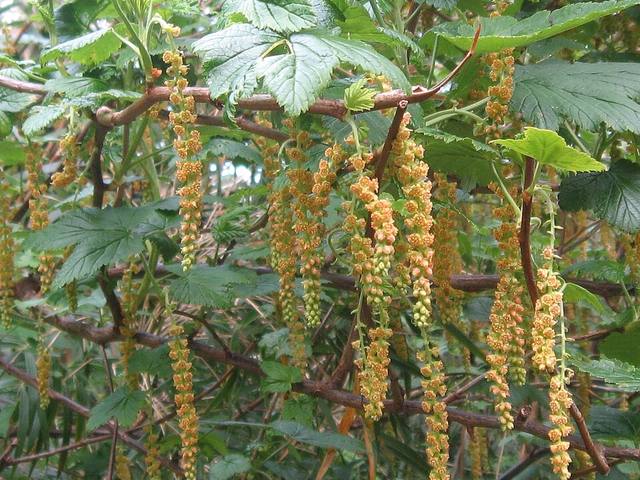
A wild blackcurrant from the beech forests at the bottom of the world; wind is not a problem.
Hardiness: zones 6 to 8
Light: part shade
Size: about 6 ft tall, 5 ft wide
Harvest: July to August
From: Patagonia and Tierra del Fuego
Here: Hardy in the Lake Erie shore climate (zone 6b to 7a), so it can live outdoors in the ground.
Good for: food, wildlife, pollinators.
Native to: Southern Cone & Patagonia. Hardy in zones 6 to 8.
The story
The Magellan currant grows in the southern beech forests from the Chilean lake district to Tierra del Fuego, about as far south as shrubs go. The Selk'nam and Yaghan ate the berries fresh.
Planting
Part shade and cool, moist, humus-rich soil. It is a plant for cool-summer climates.
Growing
Mulch well. Remove a few of the oldest stems each winter.
Harvest and use
Hanging yellow flower clusters in spring, then black currants in midsummer, sweeter and milder than the European blackcurrant.
What to watch for
Heat and dry soil. Check for local restrictions on Ribes.
See if Magellan currant (parrilla) fits your yard
Free planner: enter your ZIP for frost dates, climate fit and a sowing calendar. No account, no ads, no tracking cookies.
More berries and small fruit
- Himalayan barberry (chutro)
- Muntries
- Miracle berry
- Azores blueberry (uva-da-serra)
- Madeira blueberry (uveira-da-serra)
- Bush cherry
General guidance, not professional advice. Conditions vary by yard and year; for local specifics ask your county extension office. Never eat a wild plant you cannot identify with certainty. Traditional uses are shared as history, not medical advice. © 2026 Sean Priest · Irie Orchard. Terms & credits · Privacy · Home