Mustard
Brassica juncea
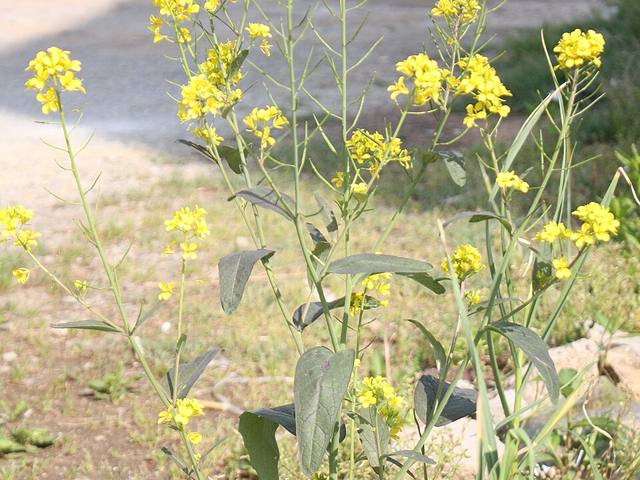
Peppery leaves in weeks and seed for the mustard pot; also a quick cover crop that cleans the soil.
Hardiness: zones 2 to 11
Light: full sun
Size: about 4 ft tall, 1 ft wide
Harvest: June to August
From: Central Asia and the Himalaya
Here: Hardy in the Lake Erie shore climate (zone 6b to 7a), so it can live outdoors in the ground.
Good for: food, pollinators, mulch and biomass.
Native to: Central Asian steppe, Himalaya & Indian hill country. Hardy in zones 2 to 11.
The story
Brown mustard arose where the Himalaya meets Central Asia and spread both ways: its oil and seed season the cooking of Bengal and Nepal, its leaves are pickled in China and simmered as greens in the American South.
Planting
Full sun and any soil. Sow in early spring or late summer.
Growing
It is up in days. Thin for big leaves, or sow thickly as a cover crop and dig it in at flowering.
Harvest and use
Pick leaves young. For seed, pull the plants as the pods turn tan and finish drying them in a paper sack, then thresh.
What to watch for
Heat makes the leaves fiery and sends it to seed. Flea beetles.
See if Mustard fits your yard
Free planner: enter your ZIP for frost dates, climate fit and a sowing calendar. No account, no ads, no tracking cookies.
More annual vegetables, herbs and grains
- Garden egg (African eggplant)
- Egusi melon
- Lima bean (butter bean)
- Scarlet runner bean
- Epazote (paico)
- Maca
General guidance, not professional advice. Conditions vary by yard and year; for local specifics ask your county extension office. Never eat a wild plant you cannot identify with certainty. Traditional uses are shared as history, not medical advice. © 2026 Sean Priest · Irie Orchard. Terms & credits · Privacy · Home