Nasturtium
Tropaeolum majus
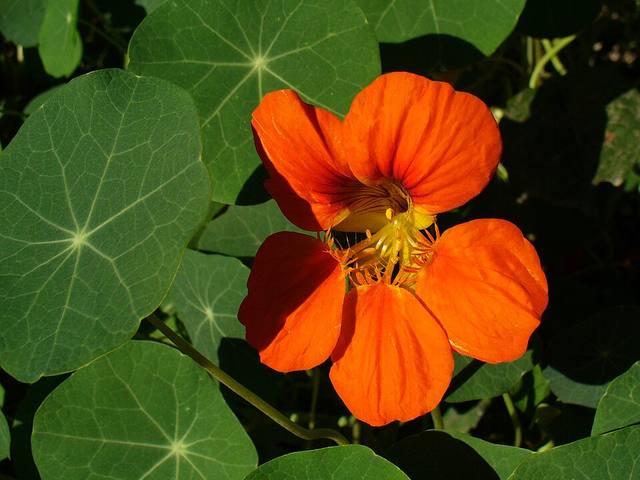
Peppery edible flowers and a trap crop that lures aphids away.
Hardiness: zones 2 to 11
Light: full sun
Size: about 1 ft tall, 2 ft wide
Harvest: June to October
From: Andes
Drought-hardy once established
Here: Hardy in the Lake Erie shore climate (zone 6b to 7a), so it can live outdoors in the ground.
Good for: food, pollinators.
Native to: Andean highlands. Hardy in zones 2 to 11.
The story
Nasturtium came from the Andes to Spain in the 1500s as a curiosity and became a cottage-garden flower everywhere; the peppery leaves and flowers are salad, the green seeds pickled as capers. It thrives on poor soil and neglect.
Planting
Full sun, poor to ordinary drained soil; sow seed directly after frost, half an inch deep. Rich soil gives leaves and no flowers.
Growing
Water sparingly and never feed. Trailing types climb a fence; bush types edge a bed. It self-sows.
Harvest and use
Pick leaves and flowers any time for salads and garnish; pickle the green seed pods. The flowers draw aphids off other crops.
What to watch for
Aphids (which it attracts on purpose), and cabbage worms.
See if Nasturtium fits your yard
Free planner: enter your ZIP for frost dates, climate fit and a sowing calendar. No account, no ads, no tracking cookies.
More annual vegetables, herbs and grains
General guidance, not professional advice. Conditions vary by yard and year; for local specifics ask your county extension office. Never eat a wild plant you cannot identify with certainty. Traditional uses are shared as history, not medical advice. © 2026 Sean Priest · Irie Orchard. Terms & credits · Privacy · Home