Native ginger
Alpinia caerulea
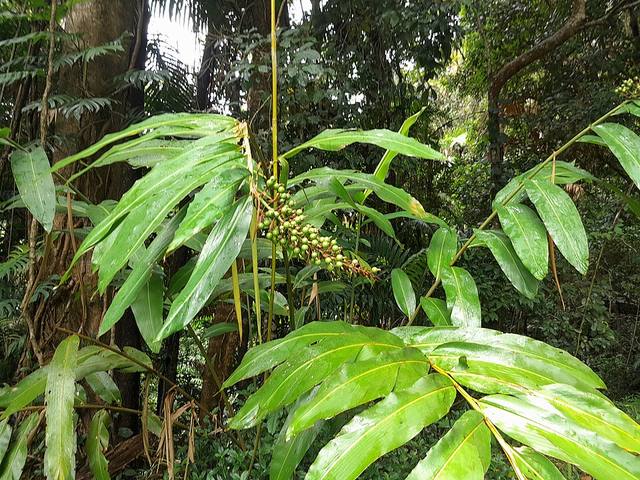
Shade-loving ginger with blue berries; the pulp and young root tips are eaten.
Hardiness: zones 10 to 11
Light: shade to part shade
Size: about 6 ft tall, 3 ft wide
Harvest: year-round
From: Eastern Australia
Here: Too tender to overwinter outdoors on the Lake Erie shore (zone 6b to 7a): grow it in a pot and bring it in, or treat it as an annual.
Good for: food.
Native to: Australia. Hardy in zones 10 to 11.
The story
Native ginger grows in the rainforests of eastern Australia, where Aboriginal peoples ate the blue fruit and the root tips and wrapped food in the leaves for cooking; it is a bush-food plant for the shaded corner of a Queensland garden.
Planting
Shade or part shade, moist rich soil, and a frost-free spot; a clumping plant to 6 feet. Plant a division.
Growing
Keep moist and mulched; it dislikes sun and drought. Divide every few years.
Harvest and use
Blue berries in autumn are tart and edible; new root tips and shoots have a ginger flavour. Use the leaves to wrap fish for baking.
What to watch for
Drought and frost.
See if Native ginger fits your yard
Free planner: enter your ZIP for frost dates, climate fit and a sowing calendar. No account, no ads, no tracking cookies.
More tropical and subtropical food plants
- Mountain apple (ʻōhiʻa ʻai)
- Plantain (cooking banana)
- Kokum
- White sapote
- Cold-hardy avocado ('Bacon', 'Mexicola')
- Noni (Tahitian noni)
General guidance, not professional advice. Conditions vary by yard and year; for local specifics ask your county extension office. Never eat a wild plant you cannot identify with certainty. Traditional uses are shared as history, not medical advice. © 2026 Sean Priest · Irie Orchard. Terms & credits · Privacy · Home