Pearl millet (bajra)
Cenchrus americanus
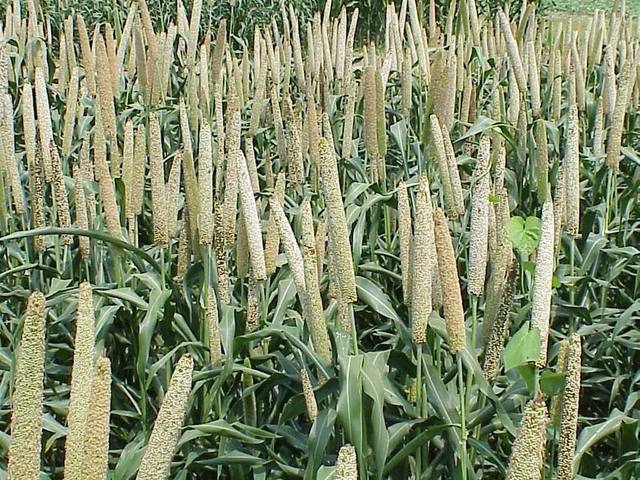
Grows on sand and 10 inches of rain where nothing else will.
Hardiness: zones 7 to 12
Light: full sun
Size: about 8 ft tall, 1.5 ft wide
Harvest: September to October
From: Sahel; Rajasthan's staple grain
Here: Hardy in the Lake Erie shore climate (zone 6b to 7a), so it can live outdoors in the ground.
Good for: food, wildlife.
Native to: Sahara & Arabian deserts, African savannas & tropics, South & Southeast Asian tropics. Hardy in zones 7 to 12.
The story
Pearl millet was domesticated in the Sahel 4,500 years ago and is the staple of Rajasthan, where bajra roti and khichdi carry the desert through winter; it grows on sand with 10 inches of rain and more heat than any other grain, and feeds a hundred million people.
Planting
Full sun, sandy drained soil, and heat; sow seed directly after the soil warms, half an inch deep, thinned to 6 inches. It reaches 8 feet.
Growing
Water little; it is the most drought-tolerant grain. No feeding. Birds love the heads, so net or grow plenty.
Harvest and use
Cut heads when the grain is hard, 80 to 100 days; dry, thresh by rubbing, and winnow. Grind for flatbread or cook as porridge.
What to watch for
Birds, and downy mildew in humid places.
See if Pearl millet (bajra) fits your yard
Free planner: enter your ZIP for frost dates, climate fit and a sowing calendar. No account, no ads, no tracking cookies.
More annual vegetables, herbs and grains
General guidance, not professional advice. Conditions vary by yard and year; for local specifics ask your county extension office. Never eat a wild plant you cannot identify with certainty. Traditional uses are shared as history, not medical advice. © 2026 Sean Priest · Irie Orchard. Terms & credits · Privacy · Home