Ramps (wild leek)
Allium tricoccum
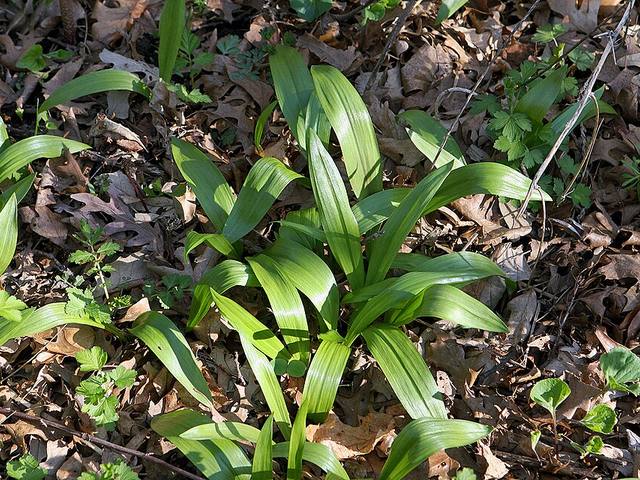
Garlicky spring greens. Grow your own patch instead of foraging wild ones.
Hardiness: zones 3 to 7
Light: shade
Size: about 1 ft tall, 0.5 ft wide
Harvest: April to May
From: E. North America
Here: Hardy in the Lake Erie shore climate (zone 6b to 7a), so it can live outdoors in the ground.
Good for: food.
Native to: Northeast, Midwest & Great Lakes, Southeast, Eastern Canada. Hardy in zones 3 to 7.
The story
Ramps were the first green of spring for the Cherokee, Haudenosaunee and Appalachian settlers alike, eaten as a tonic after winter; the Cherokee still hold ramp feasts, and West Virginia towns throw ramp suppers. Chicago's name comes from the Miami-Illinois word for the wild leek that grew along its river.
Planting
Deciduous shade, rich, moist, humus-rich soil like a forest floor. Plant bulbs in autumn or seed (which takes years), 4 inches apart; it spreads slowly.
Growing
Leave the leaves to feed the bulb, mulch with leaf litter, and never dig the whole patch. Patience: a bed takes five years to fill.
Harvest and use
Cut one leaf per plant in spring and leave the bulb, or dig bulbs only from a dense patch and only a few; wild ramps are being overharvested. Garlic-onion flavour.
What to watch for
Overharvesting; otherwise nothing.
See if Ramps (wild leek) fits your yard
Free planner: enter your ZIP for frost dates, climate fit and a sowing calendar. No account, no ads, no tracking cookies.
More native and wild plants
General guidance, not professional advice. Conditions vary by yard and year; for local specifics ask your county extension office. Never eat a wild plant you cannot identify with certainty. Traditional uses are shared as history, not medical advice. © 2026 Sean Priest · Irie Orchard. Terms & credits · Privacy · Home