Rye
Secale cereale
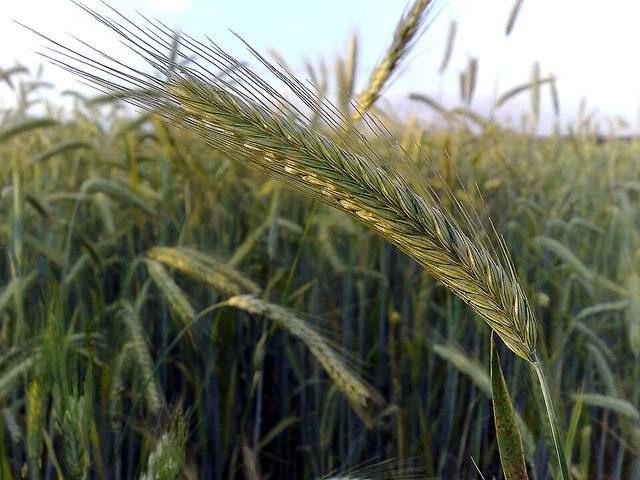
The hardiest grain: sown in autumn on poor, sandy ground, it holds soil all winter and gives dark bread flour.
Hardiness: zones 3 to 9
Light: full sun
Size: about 5 ft tall, 0.5 ft wide
Harvest: July to August
From: Anatolia, then central and northern Europe
Drought-hardy once established
Here: Hardy in the Lake Erie shore climate (zone 6b to 7a), so it can live outdoors in the ground.
Good for: food, mulch and biomass.
Native to: Temperate Europe, Northern Europe & the taiga, Central Asian steppe. Hardy in zones 3 to 9.
The story
Rye travelled north out of Anatolia as a weed among wheat, and took over where winters were hard and soils thin. It became the bread grain of Germany, Poland, Russia and the Nordic countries.
Planting
Sow in early autumn in full sun; it sprouts in cold soil and tolerates sand and acid ground.
Growing
It overwinters green and shoots up in spring. As a cover crop, cut it down at flowering and leave it as mulch.
Harvest and use
For grain, harvest in midsummer when the kernels are hard. Thresh, winnow and mill for dark, tangy bread.
What to watch for
In wet summers a dark fungus, ergot, can replace some kernels and is poisonous; pick out any black, horn-shaped grains.
See if Rye fits your yard
Free planner: enter your ZIP for frost dates, climate fit and a sowing calendar. No account, no ads, no tracking cookies.
More annual vegetables, herbs and grains
General guidance, not professional advice. Conditions vary by yard and year; for local specifics ask your county extension office. Never eat a wild plant you cannot identify with certainty. Traditional uses are shared as history, not medical advice. © 2026 Sean Priest · Irie Orchard. Terms & credits · Privacy · Home