Shea tree
Vitellaria paradoxa
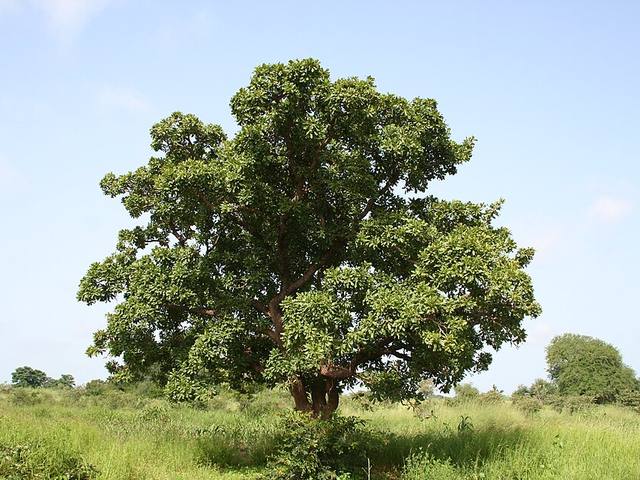
Wild trees tended for centuries; women make shea butter from the nuts for cooking and skin.
Hardiness: zones 10 to 12
Light: full sun
Size: about 40 ft tall, 30 ft wide
Harvest: year-round
From: West African savanna
Here: Too tender to overwinter outdoors on the Lake Erie shore (zone 6b to 7a): grow it in a pot and bring it in, or treat it as an annual.
Good for: food.
Native to: African savannas & tropics. Hardy in zones 10 to 12.
The story
Shea trees grow wild across the West African savanna and have been tended for centuries; women gather the fruit, eat the sweet pulp, and boil and knead the nuts into shea butter for cooking, skin and hair, a skill passed down through generations and a key source of women's income.
Planting
Full sun, drained soil, a dry season; frost-free savanna climate. Plant fresh seed; it grows very slowly.
Growing
Water young seedlings; established trees take drought and fire. Fruit begins after 15 to 20 years.
Harvest and use
Eat the ripe green fruit pulp. Dry the nuts, crack, roast and grind, then knead with water and boil to separate the butter.
What to watch for
Slow growth; buy shea butter from women's cooperatives.
See if Shea tree fits your yard
Free planner: enter your ZIP for frost dates, climate fit and a sowing calendar. No account, no ads, no tracking cookies.
More tropical and subtropical food plants
General guidance, not professional advice. Conditions vary by yard and year; for local specifics ask your county extension office. Never eat a wild plant you cannot identify with certainty. Traditional uses are shared as history, not medical advice. © 2026 Sean Priest · Irie Orchard. Terms & credits · Privacy · Home