Steppe cherry (Mongolian cherry)
Prunus fruticosa
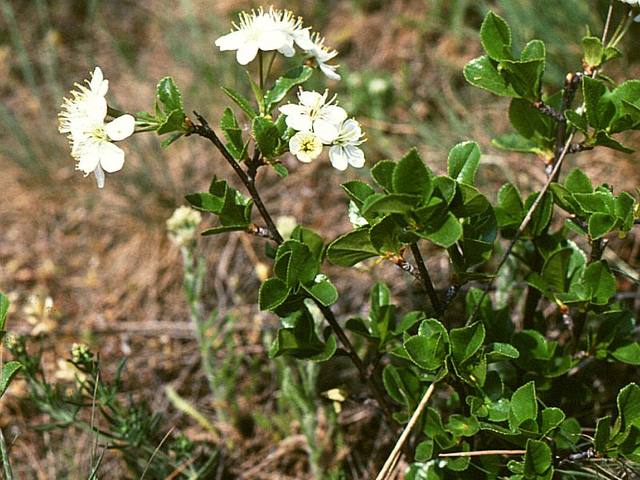
A waist-high sour cherry that suckers into thickets on dry grassland.
Hardiness: zones 2 to 7
Light: full sun
Size: about 4 ft tall, 5 ft wide
Harvest: July to August
From: Central Europe to Kazakhstan
Drought-hardy once established
Here: Hardy in the Lake Erie shore climate (zone 6b to 7a), so it can live outdoors in the ground.
Good for: food, wildlife.
Native to: Central Asian steppe, Northern Europe & the taiga. Hardy in zones 2 to 7.
The story
The ground cherry of the Eurasian steppe fed herders from Hungary to Kazakhstan with tart, bright fruit on a knee-high bush, and gave the dwarfing genes to modern sour cherries; it is the ancestor of the prairie cherries bred in Saskatchewan.
Planting
Full sun, dry drained soil; very hardy and drought-tolerant. Plant two for pollination; it suckers into a low thicket.
Growing
Water the first year, then nothing. Thin suckers. Prune only dead wood.
Harvest and use
Small tart cherries ripen in midsummer; pick for juice, jam and pies. Birds compete.
What to watch for
Birds, and brown rot in wet years.
See if Steppe cherry (Mongolian cherry) fits your yard
Free planner: enter your ZIP for frost dates, climate fit and a sowing calendar. No account, no ads, no tracking cookies.
More berries and small fruit
- Arctic bramble
- Bilberry
- Sloe (blackthorn)
- European elder
- Woodland strawberry
- Goldenberry (Cape gooseberry)
General guidance, not professional advice. Conditions vary by yard and year; for local specifics ask your county extension office. Never eat a wild plant you cannot identify with certainty. Traditional uses are shared as history, not medical advice. © 2026 Sean Priest · Irie Orchard. Terms & credits · Privacy · Home