Goldenberry (Cape gooseberry)
Physalis peruviana
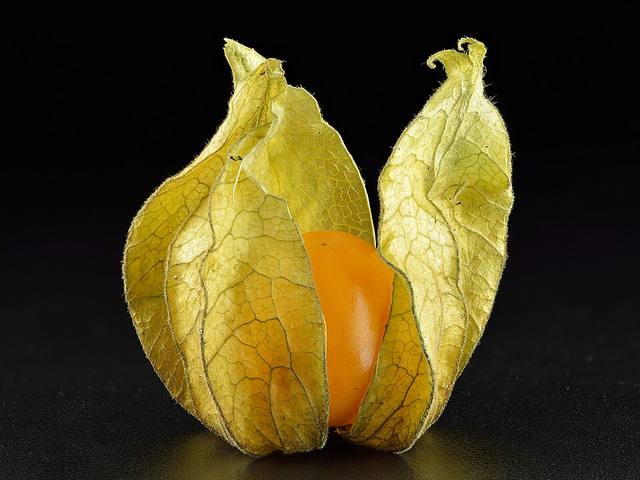
Sweet-tart orange berries in papery lanterns; grown as an annual where it frosts.
Hardiness: zones 8 to 11
Light: full sun
Size: about 4 ft tall, 4 ft wide
Harvest: August to October
From: Andes
Here: Too tender to overwinter outdoors on the Lake Erie shore (zone 6b to 7a): grow it in a pot and bring it in, or treat it as an annual.
Good for: food.
Native to: Andean highlands. Hardy in zones 8 to 11.
The story
The golden berry grows wild in the Andes and was eaten by the Inca; it was carried to the Cape of Good Hope by 1800, which is why it is also the Cape gooseberry, and became a jam fruit of South Africa, Australia and Hawaiʻi.
Planting
Full sun, drained, not-too-rich soil; grow as an annual like a tomato in cold places, a short-lived perennial in mild ones. Set out plants after frost, 3 feet apart.
Growing
Water modestly; rich soil and heavy water give leaves instead of fruit. Stake or cage the sprawling plant.
Harvest and use
Fruit drops in its papery husk when ripe, late summer to frost; gather from the ground, husk, and eat fresh or make jam.
What to watch for
Whitefly, cucumber beetles, and frost.
See if Goldenberry (Cape gooseberry) fits your yard
Free planner: enter your ZIP for frost dates, climate fit and a sowing calendar. No account, no ads, no tracking cookies.
More berries and small fruit
- Lilly pilly
- Midyim
- Golden currant (clove currant)
- Dog rose
- Andean blueberry (mortiño)
- Andean elderberry (sauco)
General guidance, not professional advice. Conditions vary by yard and year; for local specifics ask your county extension office. Never eat a wild plant you cannot identify with certainty. Traditional uses are shared as history, not medical advice. © 2026 Sean Priest · Irie Orchard. Terms & credits · Privacy · Home