European elder
Sambucus nigra
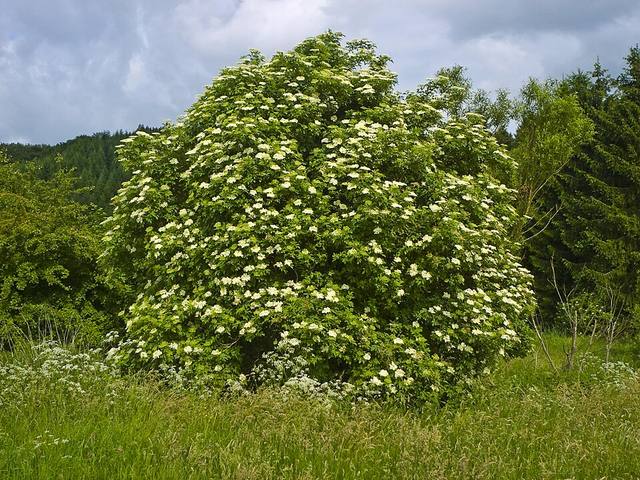
Flowers for cordial in June and berries, always cooked, in September.
Hardiness: zones 4 to 8
Light: full sun to part shade
Size: about 15 ft tall, 12 ft wide
Harvest: August to September
From: Europe, N. Africa and W. Asia
Here: Hardy in the Lake Erie shore climate (zone 6b to 7a), so it can live outdoors in the ground.
Good for: food, pollinators, wildlife, traditional use.
Native to: Temperate Europe, Mediterranean. Hardy in zones 4 to 8.
The story
Elder was the medicine chest of the European hedgerow: flowers for fever and cordial, berries for winter syrup and wine, and a tree you asked permission of before cutting. Hippocrates wrote of it; English villages still make elderflower champagne in June.
Planting
Full sun or part shade, moist, rich soil; plant in winter, 8 feet apart. It grows fast to 15 feet and suckers.
Growing
Water in dry spells; cut old stems to the ground each winter to renew it. It tolerates wet ground.
Harvest and use
Flowers in early summer for cordial and fritters; berries in late summer, stripped with a fork, cooked for syrup, wine and jam. Never eat the berries raw or the leaves and stems at all.
What to watch for
Aphids, and raw berries, which cause stomach upset.
Safety
Raw elderberries, unripe berries, seeds, leaves and stems can cause nausea and vomiting. Eat only ripe berries that have been cooked, and leave out the stems.
Medicinal uses here are shared as history, not advice. Kitchen amounts are fine for most people, but teas, tinctures and supplements can interact with medicines and aren't safe for everyone, especially in pregnancy, while breastfeeding, for children, or with liver or kidney problems. Ask a doctor or pharmacist before taking any plant as medicine.
See if European elder fits your yard
Free planner: enter your ZIP for frost dates, climate fit and a sowing calendar. No account, no ads, no tracking cookies.
More berries and small fruit
- Woodland strawberry
- Goldenberry (Cape gooseberry)
- Lilly pilly
- Midyim
- Golden currant (clove currant)
- Dog rose
General guidance, not professional advice. Conditions vary by yard and year; for local specifics ask your county extension office. Never eat a wild plant you cannot identify with certainty. Traditional uses are shared as history, not medical advice. © 2026 Sean Priest · Irie Orchard. Terms & credits · Privacy · Home