Tejpat (Indian bay leaf)
Cinnamomum tamala
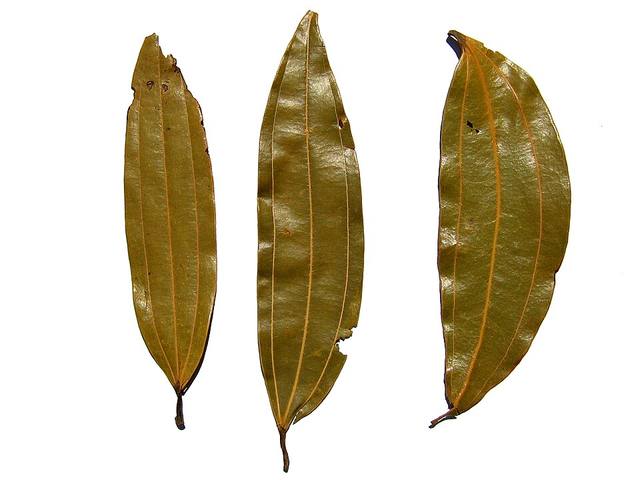
Three-veined leaves with a clove-and-cinnamon scent; the bay leaf of biryani, and not the Mediterranean one.
Hardiness: zones 9 to 11
Light: part shade
Size: about 40 ft tall, 20 ft wide
Harvest: year-round
From: Himalayan foothills
Here: Too tender to overwinter outdoors on the Lake Erie shore (zone 6b to 7a): grow it in a pot and bring it in, or treat it as an annual.
Good for: food, Ayurvedic tradition.
Native to: Himalaya & Indian hill country, South & Southeast Asian tropics. Hardy in zones 9 to 11.
The story
Tejpat is the bay leaf of north Indian and Nepali cooking. It comes from a cinnamon tree, and you can tell it from Mediterranean bay by the three long veins running the length of the leaf. In Roman times it was traded west as malabathrum.
Planting
Part shade and moist, rich, well-drained soil in a frost-free or nearly frost-free climate. A pot works elsewhere.
Growing
Keep it watered and sheltered from cold wind. Harvesting is the pruning.
Harvest and use
Pick mature leaves in the dry season and dry them in shade. Fry them briefly in oil at the start of a dal, pulao or biryani.
What to watch for
Frost. European bay is not a substitute, nor the other way round.
See if Tejpat (Indian bay leaf) fits your yard
Free planner: enter your ZIP for frost dates, climate fit and a sowing calendar. No account, no ads, no tracking cookies.
More perennial vegetables, greens and herbs
- Jimbu
- Mountain pepper (pepperberry)
- Bush tomato (kutjera)
- Anise myrtle
- Cretan dittany (diktamo)
- Bitter leaf
General guidance, not professional advice. Conditions vary by yard and year; for local specifics ask your county extension office. Never eat a wild plant you cannot identify with certainty. Traditional uses are shared as history, not medical advice. © 2026 Sean Priest · Irie Orchard. Terms & credits · Privacy · Home