Watermelon
Citrullus lanatus
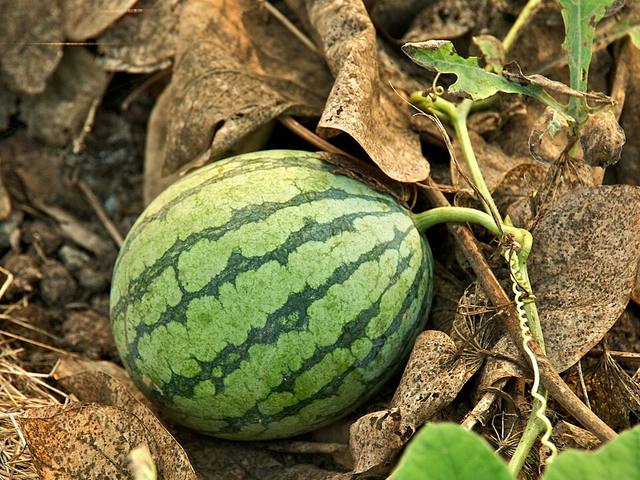
Ripe when the ground spot turns creamy yellow and the curl by the stem dries.
Hardiness: zones 3 to 11
Light: full sun
Size: about 1.5 ft tall, 8 ft wide
Harvest: August to September
From: Africa
Drought-hardy once established
Here: Hardy in the Lake Erie shore climate (zone 6b to 7a), so it can live outdoors in the ground.
Good for: food.
Native to: African savannas & tropics, Sahara & Arabian deserts. Hardy in zones 3 to 11.
The story
Watermelon was domesticated in northeast Africa, probably Sudan, 4,000 years ago and painted in Egyptian tombs; it travelled with Moorish Spain and the Atlantic slave trade to the Americas, where Black and Indigenous farmers made it a summer staple. Seed savers keep hundreds of varieties.
Planting
Full sun, sandy, warm, drained soil, and space: 6 to 8 feet per vine, sown after the soil warms. Small-fruited types fit a yard.
Growing
Water deeply while vines run, then ease off as fruit ripens for sweeter melons. Mulch, and put a board under each fruit.
Harvest and use
Ripe when the tendril nearest the fruit dries, the ground spot turns yellow, and it thumps dull; late summer. Cut, don't pull.
What to watch for
Cucumber beetles, fusarium wilt in old ground, and cool summers.
See if Watermelon fits your yard
Free planner: enter your ZIP for frost dates, climate fit and a sowing calendar. No account, no ads, no tracking cookies.
More annual vegetables, herbs and grains
General guidance, not professional advice. Conditions vary by yard and year; for local specifics ask your county extension office. Never eat a wild plant you cannot identify with certainty. Traditional uses are shared as history, not medical advice. © 2026 Sean Priest · Irie Orchard. Terms & credits · Privacy · Home