Northern white cedar (arborvitae)
Thuja occidentalis
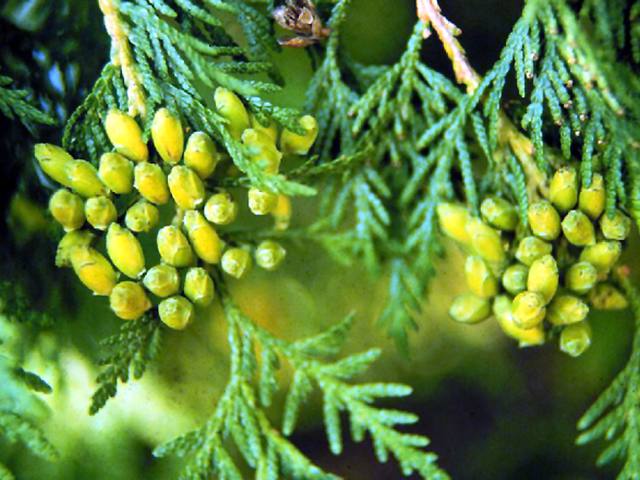
The wild parent of hedge arborvitae; winter cover for birds, and deer will browse it.
Hardiness: zones 2 to 7
Light: full sun to part shade
Size: about 30 ft tall, 10 ft wide
From: NE North America
Here: Hardy in the Lake Erie shore climate (zone 6b to 7a), so it can live outdoors in the ground.
Good for: wildlife.
Native to: Northeast, Midwest & Great Lakes, Eastern Canada, Western Canada. Hardy in zones 2 to 7.
The story
Northeastern North America, including cool ravines and fens in northern Ohio. Its name means 'tree of life': in 1536 the Haudenosaunee showed Jacques Cartier's crew a cedar tea that cured their scurvy.
Planting
Full sun to part shade. Soil: moist; tolerates clay (pH 6.0–8.0). Spacing: 3–6 ft for a hedge. Pollination: wind.
Growing
Water: moist. Winter: Knock heavy snow off so it doesn't split. Spring: Light shearing only; it won't regrow from bare brown wood. Summer: Water in drought; browning starts from dry roots. Fall: Some inner needles brown and drop: normal.
Harvest and use
Harvest: Not a food plant. First crop: —.
What to watch for
Deer browse, bagworms, winter burn.
See if Northern white cedar (arborvitae) fits your yard
Free planner: enter your ZIP for frost dates, climate fit and a sowing calendar. No account, no ads, no tracking cookies.
More native and wild plants
General guidance, not professional advice. Conditions vary by yard and year; for local specifics ask your county extension office. Never eat a wild plant you cannot identify with certainty. Traditional uses are shared as history, not medical advice. © 2026 Sean Priest · Irie Orchard. Terms & credits · Privacy · Home