Rowan
Sorbus aucuparia
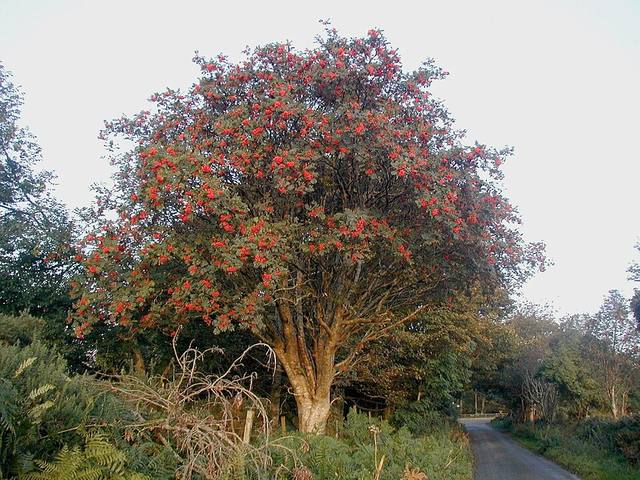
Scarlet berries feed thrushes all winter and cook into a bittersweet jelly. Birds spread it in Alaska and the Pacific Northwest, so plant it only where it is native.
Hardiness: zones 2 to 7
Light: full sun to part shade
Size: about 30 ft tall, 15 ft wide
Harvest: August to October
From: Europe and W. Siberia
Here: Hardy in the Lake Erie shore climate (zone 6b to 7a), so it can live outdoors in the ground.
Good for: food, wildlife, pollinators.
Native to: Northern Europe & the taiga, Temperate Europe. Hardy in zones 2 to 7.
The story
Rowan was the witch-tree of Britain and Scandinavia, planted by doors against evil, and its sour orange berries were made into jelly for game and a cider in Wales; the Sámi and Finns dried them for winter vitamin C. It grows higher up mountains than any other broadleaf.
Planting
Full sun or light shade, drained acid to neutral soil, and a cool climate. Plant in autumn or spring; a 30-foot tree, self-fertile.
Growing
Water the first summers, then little. No pruning needed. It dislikes hot, dry summers.
Harvest and use
Berries ripen orange-red in early autumn; bitter raw, so cook into jelly with apple, or freeze first to soften. Sweet-fruited cultivars ('Edulis') exist.
What to watch for
Fire blight, and heat stress in warm climates.
See if Rowan fits your yard
Free planner: enter your ZIP for frost dates, climate fit and a sowing calendar. No account, no ads, no tracking cookies.
More native and wild plants
- Common juniper
- European beech
- English oak
- European crab apple
- Andean alder
- Native sarsaparilla (happy wanderer)
General guidance, not professional advice. Conditions vary by yard and year; for local specifics ask your county extension office. Never eat a wild plant you cannot identify with certainty. Traditional uses are shared as history, not medical advice. © 2026 Sean Priest · Irie Orchard. Terms & credits · Privacy · Home