Common juniper
Juniperus communis
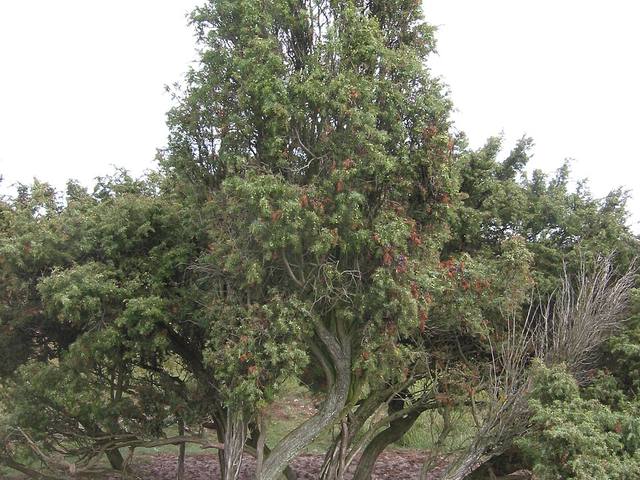
The only juniper that circles the North Pole; its berries season game and gin.
Hardiness: zones 2 to 7
Light: full sun
Size: about 6 ft tall, 8 ft wide
Harvest: September to November
From: Right around the Northern Hemisphere
Drought-hardy once established
Here: Hardy in the Lake Erie shore climate (zone 6b to 7a), so it can live outdoors in the ground.
Good for: food, wildlife.
Native to: Northern Europe & the taiga, Temperate Europe, Central Asian steppe, Alaska, Eastern Canada, Western Canada, Northeast, Midwest & Great Lakes, Rockies & Great Basin, Pacific Northwest. Hardy in zones 2 to 7.
The story
Juniper berries flavoured gin, sauerkraut and game across Europe and were burned as a purifying smoke by Sámi, Scots and Navajo alike; the Navajo and Hopi still use juniper ash in blue corn dishes. It is the most widespread conifer on earth.
Planting
Full sun, poor, dry, drained soil; it tolerates lime, cold and drought. Plant in spring; female plants bear berries if a male is near. Shrub or small tree.
Growing
Nothing beyond water the first year. Prune lightly to shape; never into bare wood.
Harvest and use
Berries take two years to ripen blue-black; pick in autumn, dry, and crush for cooking. A few go a long way.
What to watch for
Cedar-apple rust where apples grow nearby; wet feet.
See if Common juniper fits your yard
Free planner: enter your ZIP for frost dates, climate fit and a sowing calendar. No account, no ads, no tracking cookies.
More native and wild plants
- European beech
- English oak
- European crab apple
- Andean alder
- Native sarsaparilla (happy wanderer)
- Sassafras
General guidance, not professional advice. Conditions vary by yard and year; for local specifics ask your county extension office. Never eat a wild plant you cannot identify with certainty. Traditional uses are shared as history, not medical advice. © 2026 Sean Priest · Irie Orchard. Terms & credits · Privacy · Home