Ashwagandha
Withania somnifera
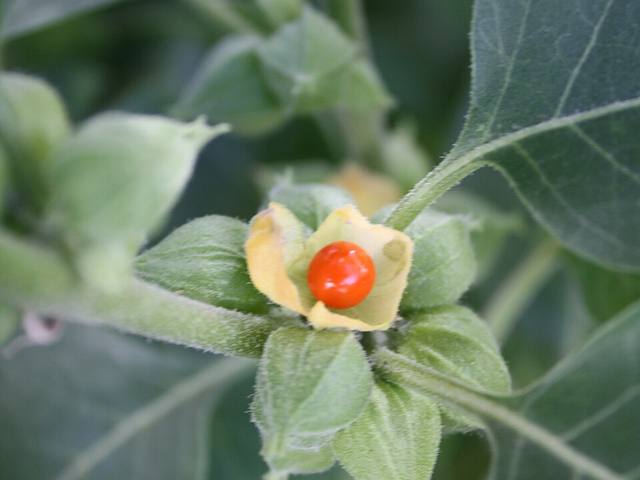
A dryland nightshade whose dried root is a mainstay of Ayurveda; grown as an annual where winters freeze.
Hardiness: zones 8 to 11
Light: full sun
Size: about 3 ft tall, 2 ft wide
Harvest: October to December
From: India, the Middle East and Africa
Drought-hardy once established
Here: Too tender to overwinter outdoors on the Lake Erie shore (zone 6b to 7a): grow it in a pot and bring it in, or treat it as an annual.
Good for: food, traditional use, Ayurvedic tradition.
Native to: South & Southeast Asian tropics, Sahara & Arabian deserts. Hardy in zones 8 to 11.
The story
Ashwagandha has been part of Ayurveda for some three thousand years. Its Sanskrit name means 'smell of the horse', for the odour of the fresh root. It grows wild on dry ground from India to North Africa.
Planting
Full sun, heat and dry, well-drained soil. Start seed indoors in cold climates.
Growing
Water sparingly. It is perennial where frost is light and an annual elsewhere.
Harvest and use
Dig the roots in autumn when the berries redden and the leaves yellow. Wash, slice and dry them; they are traditionally simmered in milk.
What to watch for
It is a nightshade and a strong herb: not for pregnancy, and anyone on medication should ask first. The berries are not eaten.
Safety
Avoid ashwagandha in pregnancy. Liver injury has been reported from supplements, and it can affect thyroid levels and interact with sedatives and with diabetes, blood pressure and immune-suppressing medicines. Like other nightshades, its leaves and berries aren't for eating.
Medicinal uses here are shared as history, not advice. Kitchen amounts are fine for most people, but teas, tinctures and supplements can interact with medicines and aren't safe for everyone, especially in pregnancy, while breastfeeding, for children, or with liver or kidney problems. Ask a doctor or pharmacist before taking any plant as medicine.
See if Ashwagandha fits your yard
Free planner: enter your ZIP for frost dates, climate fit and a sowing calendar. No account, no ads, no tracking cookies.
More perennial vegetables, greens and herbs
General guidance, not professional advice. Conditions vary by yard and year; for local specifics ask your county extension office. Never eat a wild plant you cannot identify with certainty. Traditional uses are shared as history, not medical advice. © 2026 Sean Priest · Irie Orchard. Terms & credits · Privacy · Home