Stinging nettle
Urtica dioica
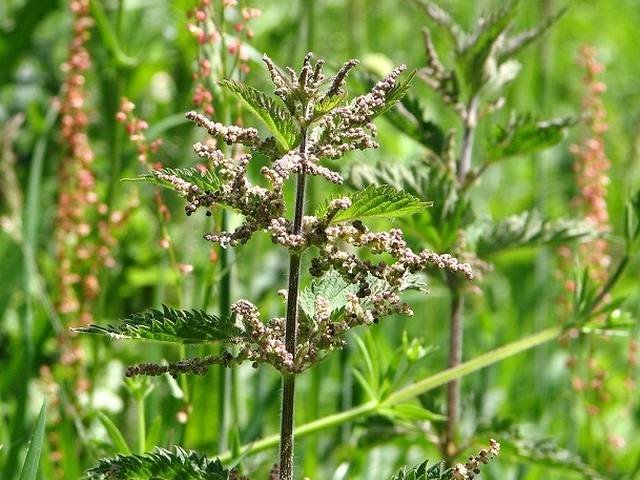
A spring green richer than spinach once cooked, a tea, a fibre and a butterfly nursery; keep it in a contained patch.
Hardiness: zones 3 to 10
Light: part shade
Size: about 4 ft tall, 3 ft wide
Harvest: March to May
From: Europe, Asia and North America
Here: Hardy in the Lake Erie shore climate (zone 6b to 7a), so it can live outdoors in the ground.
Good for: food, butterfly and moth caterpillars, mining nutrients for the compost pile, traditional use.
Native to: Temperate Europe, Northern Europe & the taiga, Northeast, Midwest & Great Lakes, Pacific Northwest. Hardy in zones 3 to 10.
The story
Nettles have fed and clothed people across the north for thousands of years: Bronze Age cloth was woven from the fibre, and nettle soup is still a rite of spring from Ireland to Sweden. Many butterflies raise their young on it.
Planting
Part shade and rich, moist soil. Give it a patch with a mown edge or a buried barrier.
Growing
Cut it back in early summer for a second flush of tender tops.
Harvest and use
Wearing gloves, pick the top few leaves in spring before it flowers. Cooking or drying removes the sting; use like spinach or dry for tea.
What to watch for
It stings and it spreads. Do not eat it once flowering, when the leaves turn gritty.
Safety
Wear gloves to harvest; cooking or drying removes the sting. Nettle can interact with blood pressure, diabetes and blood-thinning medicines.
Medicinal uses here are shared as history, not advice. Kitchen amounts are fine for most people, but teas, tinctures and supplements can interact with medicines and aren't safe for everyone, especially in pregnancy, while breastfeeding, for children, or with liver or kidney problems. Ask a doctor or pharmacist before taking any plant as medicine.
See if Stinging nettle fits your yard
Free planner: enter your ZIP for frost dates, climate fit and a sowing calendar. No account, no ads, no tracking cookies.
More perennial vegetables, greens and herbs
General guidance, not professional advice. Conditions vary by yard and year; for local specifics ask your county extension office. Never eat a wild plant you cannot identify with certainty. Traditional uses are shared as history, not medical advice. © 2026 Sean Priest · Irie Orchard. Terms & credits · Privacy · Home