Bael
Aegle marmelos
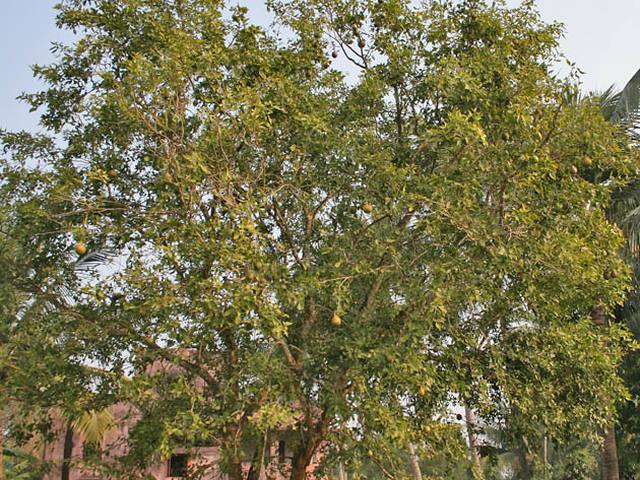
Hard-shelled, fragrant fruit for sherbet and chutney; sacred to Shiva and tough as nails.
Hardiness: zones 9 to 12
Light: full sun
Size: about 30 ft tall, 20 ft wide
Harvest: March to June
From: India
Here: Too tender to overwinter outdoors on the Lake Erie shore (zone 6b to 7a): grow it in a pot and bring it in, or treat it as an annual.
Good for: food, traditional use, Ayurvedic tradition.
Native to: South & Southeast Asian tropics. Hardy in zones 9 to 12.
The story
Bael is sacred to Shiva, whose temples are planted with it, and its leaves are offered in worship; the fruit has been made into sherbet and murabba in India for 3,000 years and the unripe fruit is an Ayurvedic remedy for the stomach. Nothing much bothers the tree.
Planting
Full sun, any drained soil, heat, and a dry season; it tolerates poor, alkaline and waterlogged ground. Plant seed or a grafted tree; thorny, slow, to 30 feet.
Growing
Water young trees, then nothing. Prune lightly to shape. It takes five to eight years to bear.
Harvest and use
Fruit ripens yellow-green in late spring; crack the hard shell, scoop the aromatic pulp, and strain for sherbet or cook into jam. Dried slices keep for years.
What to watch for
Thorns; almost nothing else.
Safety
Medicinal uses here are shared as history, not advice. Kitchen amounts are fine for most people, but teas, tinctures and supplements can interact with medicines and aren't safe for everyone, especially in pregnancy, while breastfeeding, for children, or with liver or kidney problems. Ask a doctor or pharmacist before taking any plant as medicine.
See if Bael fits your yard
Free planner: enter your ZIP for frost dates, climate fit and a sowing calendar. No account, no ads, no tracking cookies.
More fruit trees
General guidance, not professional advice. Conditions vary by yard and year; for local specifics ask your county extension office. Never eat a wild plant you cannot identify with certainty. Traditional uses are shared as history, not medical advice. © 2026 Sean Priest · Irie Orchard. Terms & credits · Privacy · Home