Baobab
Adansonia digitata
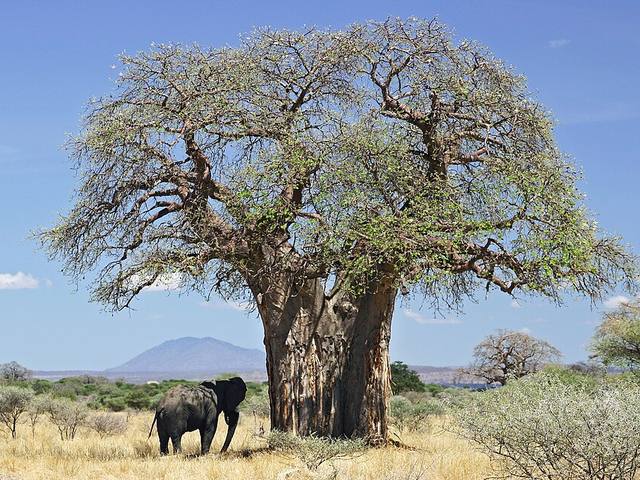
Lives for a thousand years; the dry pulp in its velvet pods is tangy and rich in vitamin C, and the leaves are cooked as greens.
Hardiness: zones 10 to 12
Light: full sun
Size: about 70 ft tall, 60 ft wide
Harvest: October to February
From: African savanna
Drought-hardy once established
Here: Too tender to overwinter outdoors on the Lake Erie shore (zone 6b to 7a): grow it in a pot and bring it in, or treat it as an annual.
Good for: food, wildlife.
Native to: African savannas & tropics. Hardy in zones 10 to 12.
The story
Baobab is the tree of life of the African savanna, living 2,000 years and storing water in a trunk the size of a room; its tart, powdery fruit pulp has been eaten and drunk across the Sahel and southern Africa for millennia, and its leaves cooked as a mucilaginous green. Villages hold councils in its shade.
Planting
Full sun, dry sandy soil, heat, and no frost; very slow at first, immense later. Plant seed scarified and soaked in the dry tropics, or in a pot as a bonsai.
Growing
Water young trees modestly in the growing season and keep bone dry in the dormant one; never let the roots sit wet. No pruning.
Harvest and use
Pods ripen in the dry season after a decade or more; crack them for the chalky pulp, which dissolves into a sour drink. Leaves are picked young and dried.
What to watch for
Rot from winter water, and cold.
See if Baobab fits your yard
Free planner: enter your ZIP for frost dates, climate fit and a sowing calendar. No account, no ads, no tracking cookies.
More tropical and subtropical food plants
General guidance, not professional advice. Conditions vary by yard and year; for local specifics ask your county extension office. Never eat a wild plant you cannot identify with certainty. Traditional uses are shared as history, not medical advice. © 2026 Sean Priest · Irie Orchard. Terms & credits · Privacy · Home