Black cherry
Prunus serotina
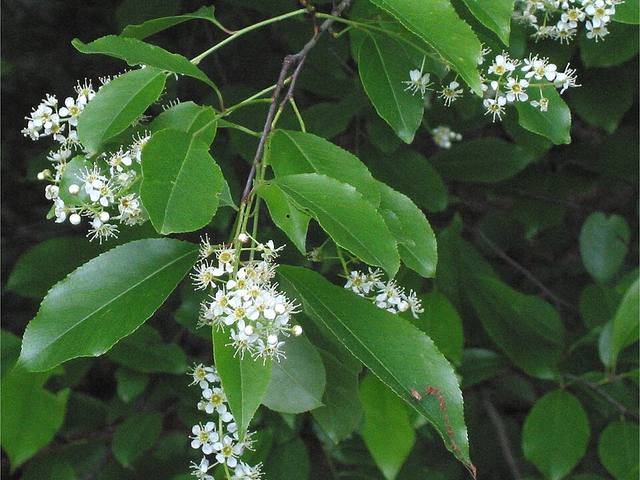
A top caterpillar host; the fruit is for jelly and birds. Leaves are toxic to livestock.
Hardiness: zones 3 to 9
Light: full sun to part shade
Size: about 60 ft tall, 35 ft wide
Harvest: August to September
From: E. North America
Here: Hardy in the Lake Erie shore climate (zone 6b to 7a), so it can live outdoors in the ground.
Good for: food, wildlife, butterfly and moth caterpillars.
Native to: Northeast, Southeast, Midwest & Great Lakes, Great Plains & Texas, Desert Southwest, Eastern Canada. Hardy in zones 3 to 9.
The story
Black cherry was gathered across the Eastern Woodlands and its bark brewed as a cough remedy by Cherokee, Delaware and Iroquois healers, a use that went straight into 19th-century patent medicines and still flavours cough syrup. The timber built America's fine furniture.
Planting
Full sun or light shade, any decent drained soil; it grows fast to 60 feet and seeds itself around. Plant in autumn or spring; it is self-fertile.
Growing
Nothing beyond water the first summer. Rake fallen leaves away from pastures; wilted leaves are toxic to livestock.
Harvest and use
Fruit ripens black in late summer and is tart but good; make jelly, syrup or cherry bounce. Birds take most of it, which is half the point.
What to watch for
Eastern tent caterpillar, black knot, and cherry scallop shell moth; wilted leaves poison grazing animals.
See if Black cherry fits your yard
Free planner: enter your ZIP for frost dates, climate fit and a sowing calendar. No account, no ads, no tracking cookies.
More native and wild plants
General guidance, not professional advice. Conditions vary by yard and year; for local specifics ask your county extension office. Never eat a wild plant you cannot identify with certainty. Traditional uses are shared as history, not medical advice. © 2026 Sean Priest · Irie Orchard. Terms & credits · Privacy · Home