Black gum
Nyssa sylvatica
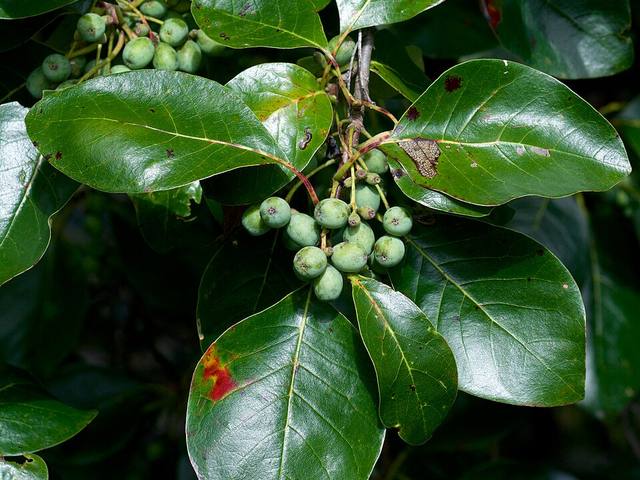
Scarlet fall color and a honey plant prized by beekeepers.
Hardiness: zones 4 to 9
Light: full sun to part shade
Size: about 50 ft tall, 30 ft wide
From: E. North America
Here: Hardy in the Lake Erie shore climate (zone 6b to 7a), so it can live outdoors in the ground.
Good for: pollinators, wildlife.
Native to: Northeast, Southeast, Midwest & Great Lakes, Eastern Canada. Hardy in zones 4 to 9.
The story
Black gum, also called tupelo, is one of the longest-lived hardwoods in the East; trees over 650 years old are known. Old ones often go hollow, and settlers sawed the hollow logs into beehives called bee gums.
Planting
Sun or part shade and moist, acid soil. It has a taproot, so plant it small and don't move it.
Growing
Water in the first years. It is slow, steady and trouble-free.
Harvest and use
The first tree to turn in fall, a glossy scarlet. Its small flowers make tupelo honey, and migrating thrushes strip the blue-black fruit.
What to watch for
Slow growth. Only female trees fruit.
See if Black gum fits your yard
Free planner: enter your ZIP for frost dates, climate fit and a sowing calendar. No account, no ads, no tracking cookies.
More native and wild plants
General guidance, not professional advice. Conditions vary by yard and year; for local specifics ask your county extension office. Never eat a wild plant you cannot identify with certainty. Traditional uses are shared as history, not medical advice. © 2026 Sean Priest · Irie Orchard. Terms & credits · Privacy · Home