Shagbark hickory
Carya ovata
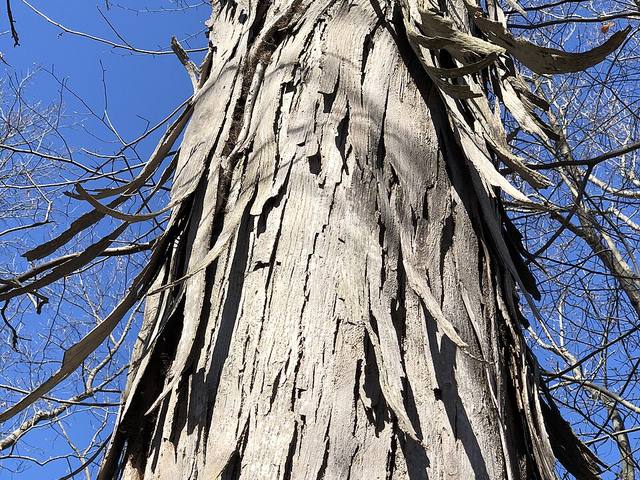
Sweet nuts in a hard shell, and bark that looks permanently windblown.
Hardiness: zones 4 to 8
Light: full sun
Size: about 70 ft tall, 40 ft wide
Harvest: September to October
From: E. North America
Drought-hardy once established
Here: Hardy in the Lake Erie shore climate (zone 6b to 7a), so it can live outdoors in the ground.
Good for: food, wildlife, butterfly and moth caterpillars.
Native to: Northeast, Southeast, Midwest & Great Lakes, Great Plains & Texas, Eastern Canada. Hardy in zones 4 to 8.
The story
Shagbark hickory nuts were a staple across the Eastern Woodlands; Cherokee, Shawnee and Haudenosaunee cooks pounded them, shell and all, into a milk called kanuchi that was simmered into soups and hominy. The peeling bark names the tree and once smoked the ham.
Planting
Full sun, deep, drained soil, and patience: a nut-grown tree takes 15 years or more. Plant in autumn where it will stay; the taproot resents moving.
Growing
Water the first summers; after that it looks after itself for two centuries. Rake the nuts before the squirrels do.
Harvest and use
Nuts drop in their four-part husks in early autumn; dry a few weeks, then crack with a vise or hammer. Sweeter than pecan and worth the work.
What to watch for
Squirrels, hickory shuckworm, and the thin, picky harvest.
See if Shagbark hickory fits your yard
Free planner: enter your ZIP for frost dates, climate fit and a sowing calendar. No account, no ads, no tracking cookies.
More native and wild plants
General guidance, not professional advice. Conditions vary by yard and year; for local specifics ask your county extension office. Never eat a wild plant you cannot identify with certainty. Traditional uses are shared as history, not medical advice. © 2026 Sean Priest · Irie Orchard. Terms & credits · Privacy · Home