Chokecherry
Prunus virginiana
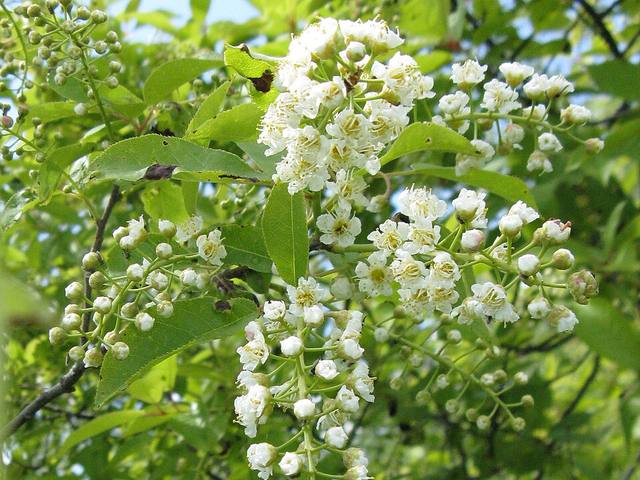
Puckery raw, excellent as jelly and syrup. Seeds and leaves are toxic.
Hardiness: zones 2 to 7
Light: full sun to part shade
Size: about 20 ft tall, 15 ft wide
Harvest: July to August
From: North America
Drought-hardy once established
Here: Hardy in the Lake Erie shore climate (zone 6b to 7a), so it can live outdoors in the ground.
Good for: food, pollinators, wildlife, butterfly and moth caterpillars.
Native to: Northeast, Midwest & Great Lakes, Great Plains & Texas, Rockies & Great Basin, Desert Southwest, California, Pacific Northwest, Eastern Canada, Western Canada. Hardy in zones 2 to 7.
The story
Chokecherry was the most important wild fruit of the Great Plains: Lakota, Cheyenne, Blackfoot and Cree families pounded the fruit, pits and all, into cakes and mixed it with dried meat and fat for wasna and pemmican; the Lakota name the moon of ripening cherries after it.
Planting
Full sun or part shade, any drained soil; extremely hardy. Plant in spring; it suckers into a thicket and grows to 20 feet.
Growing
No care beyond water in the first year. Thin suckers or let it hedge. Cut out black knot swellings when you see them.
Harvest and use
Clusters ripen black-red in late summer; astringent raw, excellent as syrup, jelly and wine. Pits contain cyanide compounds; do not eat them raw or crushed in quantity.
What to watch for
Black knot fungus, tent caterpillars, and the pits if eaten raw.
See if Chokecherry fits your yard
Free planner: enter your ZIP for frost dates, climate fit and a sowing calendar. No account, no ads, no tracking cookies.
More native and wild plants
General guidance, not professional advice. Conditions vary by yard and year; for local specifics ask your county extension office. Never eat a wild plant you cannot identify with certainty. Traditional uses are shared as history, not medical advice. © 2026 Sean Priest · Irie Orchard. Terms & credits · Privacy · Home