American plum
Prunus americana
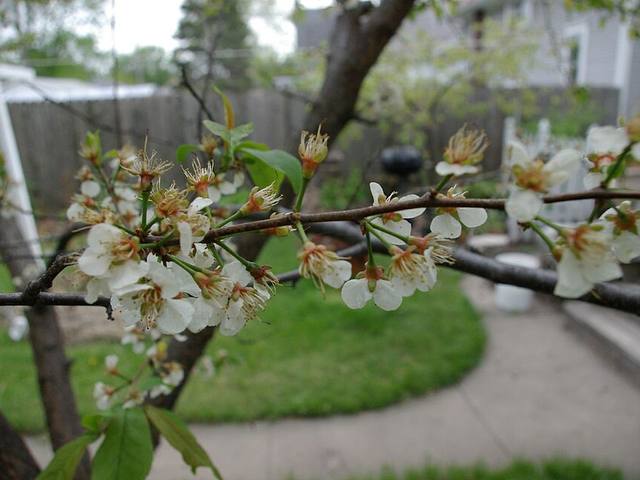
Thicket-forming and very hardy; tart-skinned plums make fine jam.
Hardiness: zones 3 to 8
Light: full sun
Size: about 15 ft tall, 15 ft wide
Harvest: August to September
From: North America
Drought-hardy once established
Here: Hardy in the Lake Erie shore climate (zone 6b to 7a), so it can live outdoors in the ground.
Good for: food, pollinators, wildlife, butterfly and moth caterpillars.
Native to: Northeast, Midwest & Great Lakes, Great Plains & Texas, Southeast, Rockies & Great Basin, Western Canada, Eastern Canada. Hardy in zones 3 to 8.
The story
The wild plum of the prairies and eastern woods was tended by Lakota, Omaha, Cherokee and many other nations, who dried the fruit for winter and planted thickets near their villages; the Omaha called a late-summer moon after it. Settlers made it into jam and crossed it with Japanese plums for hardy varieties.
Planting
Full sun and any drained soil; it is very hardy and takes drought. Plant two seedlings for pollination, 10 feet apart; it suckers into a thicket, which is how it likes to live.
Growing
Water the first summer, then little. Thin suckers to keep a few trunks, or let the hedge form for wildlife. Prune only dead wood.
Harvest and use
Fruit ripens red to yellow in late summer; shake the branches over a sheet. Tart-sweet; the skin is sour, the flesh is sweet. Jam, jelly, dried fruit.
What to watch for
Black knot on branches, plum curculio, and brown rot in humid years.
See if American plum fits your yard
Free planner: enter your ZIP for frost dates, climate fit and a sowing calendar. No account, no ads, no tracking cookies.
More native and wild plants
General guidance, not professional advice. Conditions vary by yard and year; for local specifics ask your county extension office. Never eat a wild plant you cannot identify with certainty. Traditional uses are shared as history, not medical advice. © 2026 Sean Priest · Irie Orchard. Terms & credits · Privacy · Home