Hackberry
Celtis occidentalis
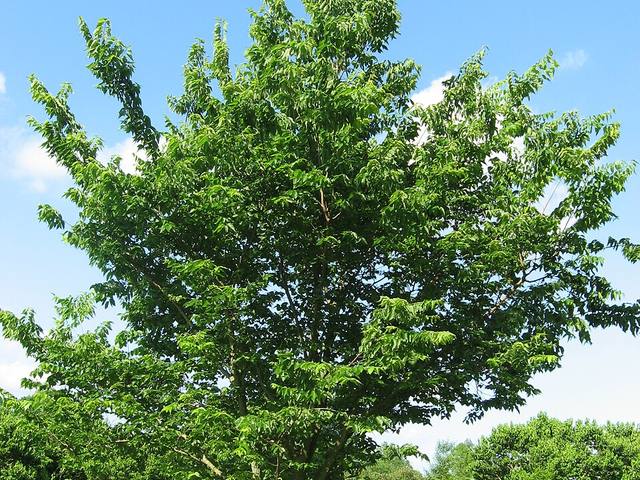
Tough as a parking-lot tree; small sweet berries are edible, mostly seed.
Hardiness: zones 2 to 9
Light: full sun
Size: about 50 ft tall, 45 ft wide
Harvest: September to November
From: North America
Drought-hardy once established
Here: Hardy in the Lake Erie shore climate (zone 6b to 7a), so it can live outdoors in the ground.
Good for: food, wildlife, butterfly and moth caterpillars.
Native to: Northeast, Southeast, Midwest & Great Lakes, Great Plains & Texas, Eastern Canada, Western Canada. Hardy in zones 2 to 9.
The story
Hackberry fed the Great Plains and Southwest nations for thousands of years; the sweet, crunchy berries were pounded whole with fat into cakes by Comanche and Apache families, and their seeds turn up in ancient hearths across the continent.
Planting
Full sun and any soil, from wet clay to dry alkaline ground; it is one of the toughest native shade trees. Plant in spring or autumn; it reaches 50 feet.
Growing
Water the first summer, then nothing. No pruning needed. It tolerates city air, wind and drought.
Harvest and use
Berries ripen dark orange-brown in autumn and hang into winter; eat whole, crunching the thin sweet flesh and the nutty seed, or grind into meal.
What to watch for
Nipple galls on leaves and witches' broom, both harmless; nothing serious.
See if Hackberry fits your yard
Free planner: enter your ZIP for frost dates, climate fit and a sowing calendar. No account, no ads, no tracking cookies.
More native and wild plants
General guidance, not professional advice. Conditions vary by yard and year; for local specifics ask your county extension office. Never eat a wild plant you cannot identify with certainty. Traditional uses are shared as history, not medical advice. © 2026 Sean Priest · Irie Orchard. Terms & credits · Privacy · Home