Calafate
Berberis microphylla
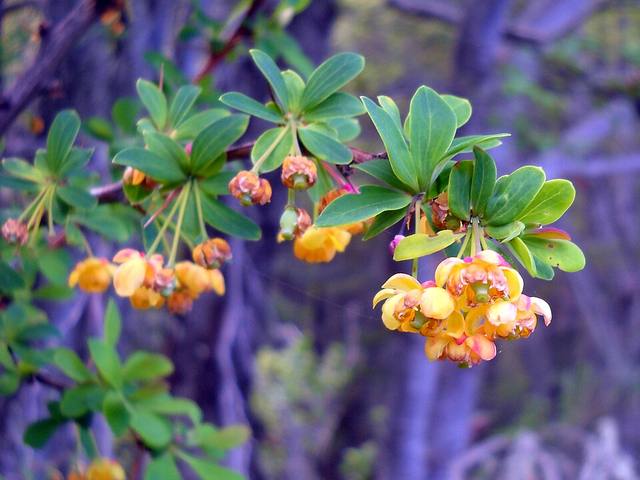
Thorny, wind-proof and loaded with blue-black berries; Patagonians say whoever eats one will come back.
Hardiness: zones 6 to 9
Light: full sun
Size: about 5 ft tall, 5 ft wide
Harvest: January to March
From: Patagonia
Drought-hardy once established
Here: Hardy in the Lake Erie shore climate (zone 6b to 7a), so it can live outdoors in the ground.
Good for: food, pollinators, wildlife.
Native to: Southern Cone & Patagonia. Hardy in zones 6 to 9.
The story
Calafate gives its name to a town on the edge of the Patagonian ice field. The Tehuelche and Selk'nam ate the berries and used the wood and roots for dye, and the legend that one taste will bring you back to Patagonia is told to every visitor.
Planting
Full sun, cool summers and well-drained soil. It shrugs off wind, cold and drought.
Growing
Little care; thin old stems every few years. Wear thick gloves.
Harvest and use
Pick the blue-black berries in late summer when soft. They are sweet-sharp and seedy, best as jam, syrup or ice cream.
What to watch for
Three-pronged thorns. It dislikes hot, humid summers.
See if Calafate fits your yard
Free planner: enter your ZIP for frost dates, climate fit and a sowing calendar. No account, no ads, no tracking cookies.
More berries and small fruit
- Murta (Chilean guava)
- Caucasian whortleberry
- Makomako (wineberry)
- Num-num
- Chaura (prickly heath)
- Magellan currant (parrilla)
General guidance, not professional advice. Conditions vary by yard and year; for local specifics ask your county extension office. Never eat a wild plant you cannot identify with certainty. Traditional uses are shared as history, not medical advice. © 2026 Sean Priest · Irie Orchard. Terms & credits · Privacy · Home