Caucasian whortleberry
Vaccinium arctostaphylos
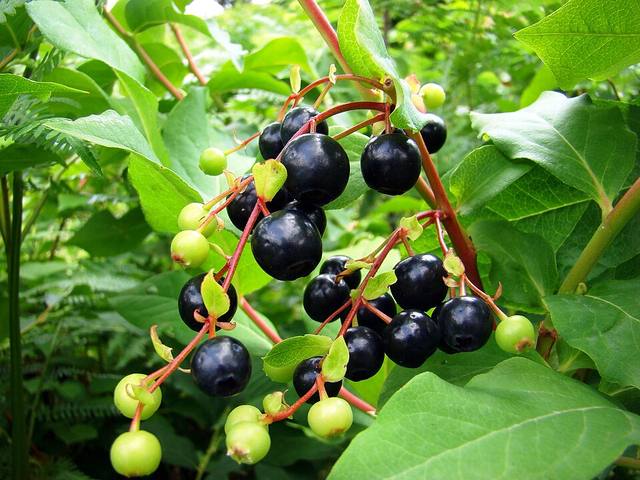
A tall, ancient blueberry of Colchic forests; black berries for jam and leaves dried as a mountain tea.
Hardiness: zones 6 to 9
Light: part shade
Size: about 8 ft tall, 6 ft wide
Harvest: August to September
From: Caucasus and the Black Sea coast
Here: Hardy in the Lake Erie shore climate (zone 6b to 7a), so it can live outdoors in the ground.
Good for: food, pollinators, wildlife.
Native to: Caucasus. Hardy in zones 6 to 9.
The story
This tall blueberry is a survivor from the forests that covered Europe before the ice ages, holding on around the Black Sea and in the Caucasus. Highland families gather the berries for jam, and the dried leaves are drunk as a tea in parts of Georgia and northern Turkey.
Planting
Part shade, acid soil rich in leaf mould, and humid air. It suits the edge of woodland.
Growing
Mulch with pine needles or bark and water with rain water where the tap water is hard.
Harvest and use
Clusters of black berries ripen in late summer and autumn. Use them like blueberries; they are sharper and good cooked.
What to watch for
Lime in the soil yellows it. Birds take the fruit.
See if Caucasian whortleberry fits your yard
Free planner: enter your ZIP for frost dates, climate fit and a sowing calendar. No account, no ads, no tracking cookies.
More berries and small fruit
- Makomako (wineberry)
- Num-num
- Chaura (prickly heath)
- Magellan currant (parrilla)
- Himalayan barberry (chutro)
- Muntries
General guidance, not professional advice. Conditions vary by yard and year; for local specifics ask your county extension office. Never eat a wild plant you cannot identify with certainty. Traditional uses are shared as history, not medical advice. © 2026 Sean Priest · Irie Orchard. Terms & credits · Privacy · Home