Num-num
Carissa bispinosa
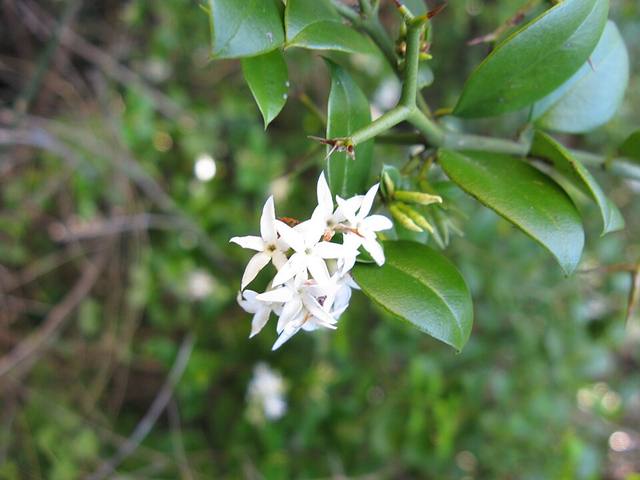
Jasmine-scented stars, forked thorns and sweet red berries eaten whole; a hedge nothing walks through.
Hardiness: zones 9 to 11
Light: part shade
Size: about 8 ft tall, 6 ft wide
Harvest: year-round
From: Southern and eastern Africa
Drought-hardy once established
Here: Too tender to overwinter outdoors on the Lake Erie shore (zone 6b to 7a): grow it in a pot and bring it in, or treat it as an annual.
Good for: food, wildlife, screens and hedges.
Native to: Cape of South Africa, African savannas & tropics. Hardy in zones 9 to 11.
The story
Num-num is the smaller cousin of the Natal plum, at home in the thickets and forest edges of the Eastern Cape. The name is said to come from the Khoekhoe and sounds exactly like what children say when eating the fruit.
Planting
Sun or shade and well-drained soil. It is good under trees and near the coast.
Growing
Clip it into a hedge or leave it to mound. It takes drought.
Harvest and use
Small red berries, eaten skin, seeds and all. White flowers scent the evening and feed butterflies and moths.
What to watch for
Forked thorns. Milky sap; only the ripe fruit is eaten.
See if Num-num fits your yard
Free planner: enter your ZIP for frost dates, climate fit and a sowing calendar. No account, no ads, no tracking cookies.
More berries and small fruit
- Chaura (prickly heath)
- Magellan currant (parrilla)
- Himalayan barberry (chutro)
- Muntries
- Miracle berry
- Azores blueberry (uva-da-serra)
General guidance, not professional advice. Conditions vary by yard and year; for local specifics ask your county extension office. Never eat a wild plant you cannot identify with certainty. Traditional uses are shared as history, not medical advice. © 2026 Sean Priest · Irie Orchard. Terms & credits · Privacy · Home