Coral tree (mulungu-do-litoral)
Erythrina speciosa
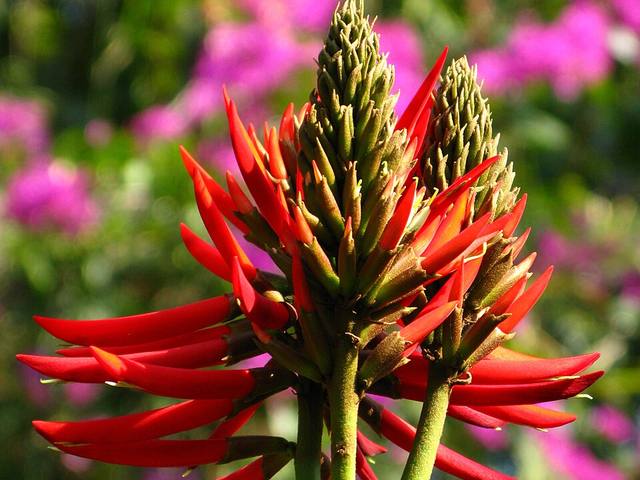
Bare winter branches lit up with red flower spikes: hummingbird central, and it fixes nitrogen.
Hardiness: zones 9 to 11
Light: full sun
Size: about 15 ft tall, 12 ft wide
From: Coastal Atlantic Forest of SE Brazil
Drought-hardy once established
Here: Too tender to overwinter outdoors on the Lake Erie shore (zone 6b to 7a): grow it in a pot and bring it in, or treat it as an annual.
Good for: fixing nitrogen in the soil, pollinators, wildlife.
Native to: Atlantic Forest of Brazil. Hardy in zones 9 to 11.
The story
Brazilians call it mulungu-do-litoral or candelabro for its upright winter flower spikes. Gardeners on the Rio and São Paulo coast plant it to bring hummingbirds when little else is in bloom.
Planting
Full sun and well-drained soil; takes drought, sea breeze and poor ground. Grows easily from cuttings or seed.
Growing
A nitrogen-fixing shrub or small tree. Prune after flowering to keep it bushy; it is nearly pest-free.
Harvest and use
A pollinator and soil plant rather than a food plant: red winter flowers for hummingbirds, leaves as mulch.
What to watch for
Seeds and bark are toxic; do not eat any part. The stems carry short prickles.
See if Coral tree (mulungu-do-litoral) fits your yard
Free planner: enter your ZIP for frost dates, climate fit and a sowing calendar. No account, no ads, no tracking cookies.
More native and wild plants
- Caraguatá (forest bromeliad)
- Brazilwood (pau-brasil)
- Jatobá-do-cerrado
- Himalayan alder (utis)
- Camellia (tsubaki)
- Azores laurel (louro)
General guidance, not professional advice. Conditions vary by yard and year; for local specifics ask your county extension office. Never eat a wild plant you cannot identify with certainty. Traditional uses are shared as history, not medical advice. © 2026 Sean Priest · Irie Orchard. Terms & credits · Privacy · Home