Culantro
Eryngium foetidum
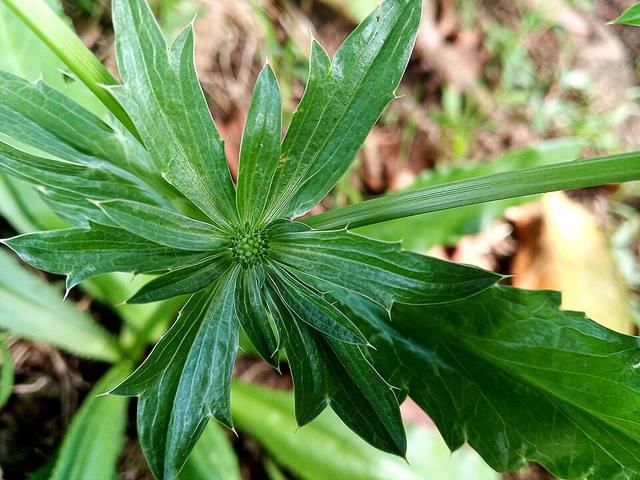
Cilantro's stronger cousin, the herb of sofrito and Costa Rican picadillo; takes heat and shade.
Hardiness: zones 9 to 12
Light: part shade to full sun
Size: about 1 ft tall, 1 ft wide
Harvest: year-round
From: Caribbean and Central America
Drought-hardy once established
Here: Too tender to overwinter outdoors on the Lake Erie shore (zone 6b to 7a): grow it in a pot and bring it in, or treat it as an annual.
Good for: food, pollinators.
Native to: Mexico, Central America & the Caribbean, Tropical South America. Hardy in zones 9 to 12.
The story
Culantro, culantro coyote in Costa Rica and recao in Puerto Rico, grows wild in the shady forests of the Caribbean and Central America and was used by the Taíno and Maya long before cilantro arrived from the Old World; it is stronger than cilantro and doesn't bolt in heat. Vietnamese cooks know it as ngò gai.
Planting
Part shade, rich, moist soil, heat, humidity; it bolts in full sun. Sow seed on the surface in warm weather or plant a clump; a low rosette.
Growing
Keep moist and shaded; cut flower stalks to keep it leafy. It self-sows where it is happy.
Harvest and use
Pick outer leaves any time; use fresh in sofrito, gallo pinto, soups and salsas. Use less than you would cilantro.
What to watch for
Full sun and dry soil make it bolt.
See if Culantro fits your yard
Free planner: enter your ZIP for frost dates, climate fit and a sowing calendar. No account, no ads, no tracking cookies.
More perennial vegetables, greens and herbs
General guidance, not professional advice. Conditions vary by yard and year; for local specifics ask your county extension office. Never eat a wild plant you cannot identify with certainty. Traditional uses are shared as history, not medical advice. © 2026 Sean Priest · Irie Orchard. Terms & credits · Privacy · Home