Yam (uhi)
Dioscorea alata
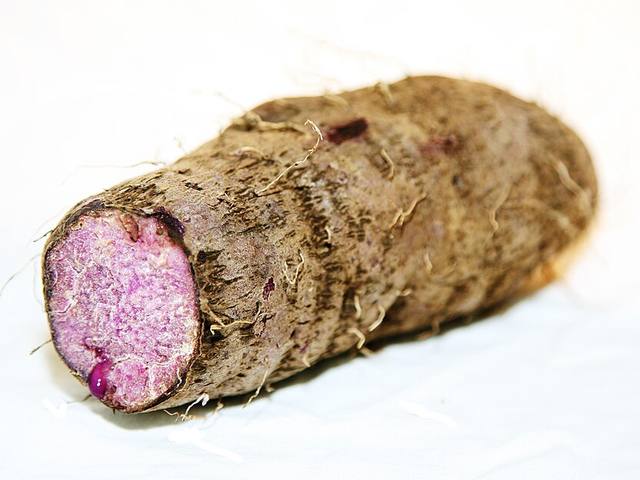
The great yam of the Pacific, carried by voyagers to Hawaiʻi and Rapa Nui; tubers keep for months.
Hardiness: zones 9 to 12
Light: full sun
Size: about 15 ft tall, 3 ft wide
Harvest: year-round
From: Southeast Asia; a Polynesian canoe plant
Here: Too tender to overwinter outdoors on the Lake Erie shore (zone 6b to 7a): grow it in a pot and bring it in, or treat it as an annual.
Good for: food.
Native to: South & Southeast Asian tropics, Hawaiʻi & Pacific Islands, New Guinea & Melanesia. Hardy in zones 9 to 12.
The story
The water yam, or greater yam, is one of the canoe plants Polynesian voyagers carried across the Pacific. It was farmed on Rapa Nui and throughout Polynesia and is still a staple across tropical Asia, Africa and the Caribbean, including purple ube in the Philippines.
Planting
Full sun, deep loose soil and long frost-free warmth. Plant a tuber piece with a bud in spring, 4 inches deep, beside a tall support.
Growing
Give the vine a trellis or tree to climb, water through dry spells and feed with compost. It takes 8 to 10 months to make large tubers.
Harvest and use
Dig after the vines die back. Peel and always cook; boil, roast or mash, or make purple yam jam (ube halaya).
What to watch for
Frost; raw yam can irritate the skin and mouth, so always cook it.
See if Yam (uhi) fits your yard
Free planner: enter your ZIP for frost dates, climate fit and a sowing calendar. No account, no ads, no tracking cookies.
More perennial vegetables, greens and herbs
- Ti (kī)
- White yam (Guinea yam)
- Good King Henry
- Kawakawa
- Horopito (pepper tree)
- Pikopiko (hen and chicken fern)
General guidance, not professional advice. Conditions vary by yard and year; for local specifics ask your county extension office. Never eat a wild plant you cannot identify with certainty. Traditional uses are shared as history, not medical advice. © 2026 Sean Priest · Irie Orchard. Terms & credits · Privacy · Home