Kawakawa
Piper excelsum
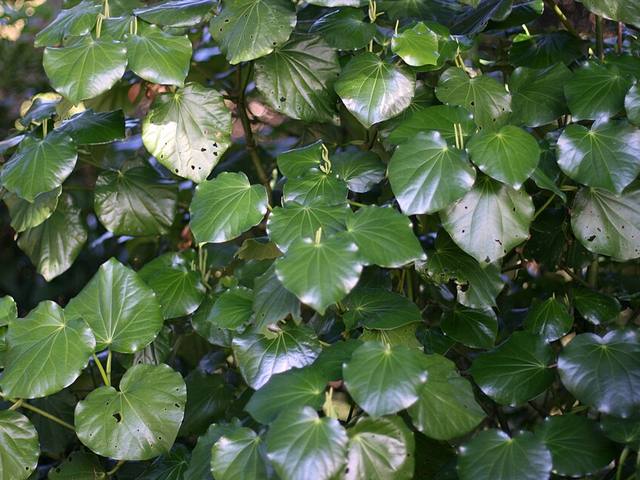
Heart-shaped peppery leaves for tea and seasoning; the ones the looper moth has holed are said to be the best.
Hardiness: zones 9 to 11
Light: part shade
Size: about 12 ft tall, 8 ft wide
Harvest: year-round
From: Aotearoa New Zealand
Here: Too tender to overwinter outdoors on the Lake Erie shore (zone 6b to 7a): grow it in a pot and bring it in, or treat it as an annual.
Good for: food, wildlife, traditional use.
Native to: Aotearoa New Zealand. Hardy in zones 9 to 11.
The story
Kawakawa is one of the best-loved plants of Māori rongoā, the traditional healing practice of Aotearoa. Its leaves have long been steeped as a tea and used in ceremony, and a sprig is still worn at times of mourning. It is a small pepper, cousin to the kava of the wider Pacific.
Planting
Shade or dappled light, shelter from wind and frost, and moist leafy soil. In cooler places grow it in a pot that can come indoors for winter.
Growing
Keep it watered through dry spells and mulch with leaf litter. Tip-prune lightly to keep it bushy.
Harvest and use
Pick a few leaves at a time for tea, fresh or dried; they add a peppery note to broths. Take leaves from different stems so the plant keeps its shape.
What to watch for
Frost blackens it. Holes in the leaves are the kawakawa looper caterpillar and do no real harm.
Safety
Medicinal uses here are shared as history, not advice. Kitchen amounts are fine for most people, but teas, tinctures and supplements can interact with medicines and aren't safe for everyone, especially in pregnancy, while breastfeeding, for children, or with liver or kidney problems. Ask a doctor or pharmacist before taking any plant as medicine.
See if Kawakawa fits your yard
Free planner: enter your ZIP for frost dates, climate fit and a sowing calendar. No account, no ads, no tracking cookies.
More perennial vegetables, greens and herbs
- Horopito (pepper tree)
- Pikopiko (hen and chicken fern)
- Yerba mate
- Boldo
- Jonjoli (Colchis bladdernut)
- Caucasian spinach
General guidance, not professional advice. Conditions vary by yard and year; for local specifics ask your county extension office. Never eat a wild plant you cannot identify with certainty. Traditional uses are shared as history, not medical advice. © 2026 Sean Priest · Irie Orchard. Terms & credits · Privacy · Home