Yerba mate
Ilex paraguariensis
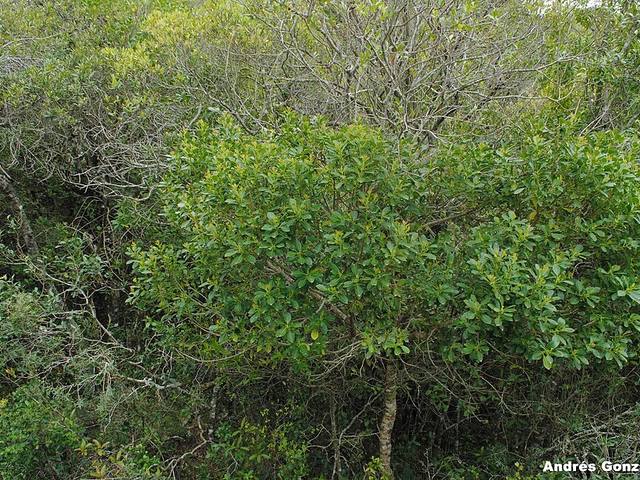
A holly of the Paraná forests; its dried leaves make the shared gourd drink of the Guaraní and the gauchos.
Hardiness: zones 9 to 11
Light: part shade
Size: about 30 ft tall, 15 ft wide
Harvest: year-round
From: Paraguay, S. Brazil, Uruguay and NE Argentina
Here: Too tender to overwinter outdoors on the Lake Erie shore (zone 6b to 7a): grow it in a pot and bring it in, or treat it as an annual.
Good for: food, wildlife, traditional use.
Native to: Southern Cone & Patagonia, Atlantic Forest of Brazil. Hardy in zones 9 to 11.
The story
The Guaraní were drinking mate long before Europeans arrived, and Jesuit missions later learned to raise the tree from seed. Passing the gourd and its metal straw around a circle is still the daily ritual of friendship across Paraguay, Uruguay, Argentina and southern Brazil.
Planting
Part shade when young, rich acid soil and steady moisture. It takes light frost once grown; elsewhere keep it in a large pot.
Growing
Prune to a bush about head high so the leaves are in reach. Mulch and water through dry spells.
Harvest and use
Cut leafy twigs, dry them quickly with gentle heat, then crumble and age the leaf for some weeks. Steep in hot, not boiling, water.
What to watch for
It contains caffeine. Seed is very slow to sprout; start with a young plant. Hard frost burns the leaves.
Safety
Medicinal uses here are shared as history, not advice. Kitchen amounts are fine for most people, but teas, tinctures and supplements can interact with medicines and aren't safe for everyone, especially in pregnancy, while breastfeeding, for children, or with liver or kidney problems. Ask a doctor or pharmacist before taking any plant as medicine.
See if Yerba mate fits your yard
Free planner: enter your ZIP for frost dates, climate fit and a sowing calendar. No account, no ads, no tracking cookies.
More perennial vegetables, greens and herbs
General guidance, not professional advice. Conditions vary by yard and year; for local specifics ask your county extension office. Never eat a wild plant you cannot identify with certainty. Traditional uses are shared as history, not medical advice. © 2026 Sean Priest · Irie Orchard. Terms & credits · Privacy · Home