Pikopiko (hen and chicken fern)
Asplenium bulbiferum
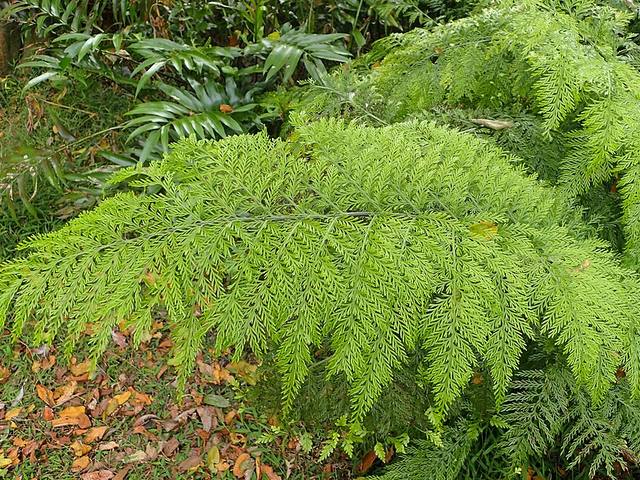
Curled young fronds are picked in spring and cooked like asparagus; it wants deep shade and steady damp.
Hardiness: zones 9 to 11
Light: shade
Size: about 3 ft tall, 3 ft wide
Harvest: September to November
From: Aotearoa New Zealand
Here: Too tender to overwinter outdoors on the Lake Erie shore (zone 6b to 7a): grow it in a pot and bring it in, or treat it as an annual.
Good for: food.
Native to: Aotearoa New Zealand. Hardy in zones 9 to 11.
The story
Pikopiko, the curled young frond of the hen and chicken fern, is one of the traditional greens of the Māori forest larder and is still served today. The fern's name comes from the baby plantlets that grow on its fronds and drop off to root.
Planting
Deep shade, shelter and constantly moist, leafy soil; a north wall bed or under trees. In cold places it is a good house plant.
Growing
Never let it dry out. Peg a frond with plantlets onto damp soil to raise new plants.
Harvest and use
In spring, snap a few fiddleheads while still tightly curled, rub off the brown scales and steam or boil them. Take only one or two from each plant.
What to watch for
Slugs love the new fronds. Be sure of the fern: only a few kinds are eaten, and they are always cooked.
See if Pikopiko (hen and chicken fern) fits your yard
Free planner: enter your ZIP for frost dates, climate fit and a sowing calendar. No account, no ads, no tracking cookies.
More perennial vegetables, greens and herbs
General guidance, not professional advice. Conditions vary by yard and year; for local specifics ask your county extension office. Never eat a wild plant you cannot identify with certainty. Traditional uses are shared as history, not medical advice. © 2026 Sean Priest · Irie Orchard. Terms & credits · Privacy · Home