Fireweed
Chamerion angustifolium
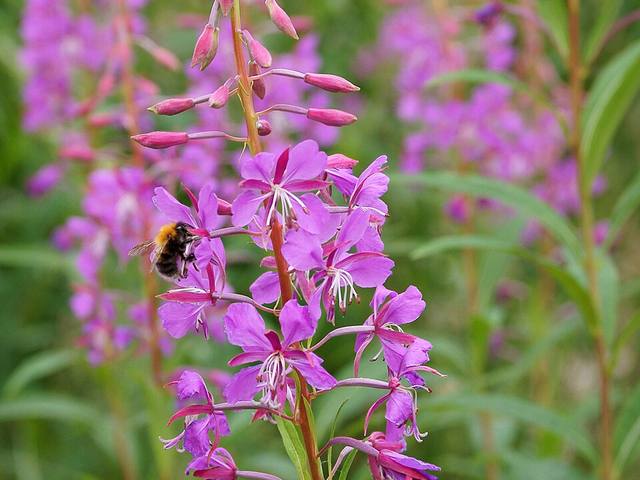
First to bloom after fires; young shoots are edible and the honey is famous.
Hardiness: zones 2 to 7
Light: full sun
Size: about 5 ft tall, 2 ft wide
Harvest: year-round
From: Northern Hemisphere
Here: Hardy in the Lake Erie shore climate (zone 6b to 7a), so it can live outdoors in the ground.
Good for: food, pollinators, butterfly and moth caterpillars.
Native to: Alaska, Western Canada, Eastern Canada, Pacific Northwest, Rockies & Great Basin, Northeast, Midwest & Great Lakes, Northern Europe & the taiga, Temperate Europe. Hardy in zones 2 to 7.
The story
Fireweed is the plant of burned ground across the north, and Dena'ina, Gwich'in, Sámi and Cree people ate its spring shoots like asparagus, steeped the leaves as tea, and used the fluff for wicks and bedding. Russian peasants fermented the leaves into Ivan chai; Alaska sells the honey and jelly.
Planting
Full sun and any disturbed, drained soil; it spreads by rhizome and seed and needs a boundary. Plant in spring in a wild corner.
Growing
No care at all. Cut back after flowering to limit seed, or let it fly. Divide to control.
Harvest and use
Young shoots in spring, peeled and steamed; leaves for tea in early summer; flowers for syrup and jelly in midsummer.
What to watch for
Its spread; nothing else.
See if Fireweed fits your yard
Free planner: enter your ZIP for frost dates, climate fit and a sowing calendar. No account, no ads, no tracking cookies.
More native and wild plants
General guidance, not professional advice. Conditions vary by yard and year; for local specifics ask your county extension office. Never eat a wild plant you cannot identify with certainty. Traditional uses are shared as history, not medical advice. © 2026 Sean Priest · Irie Orchard. Terms & credits · Privacy · Home