Lemon balm
Melissa officinalis
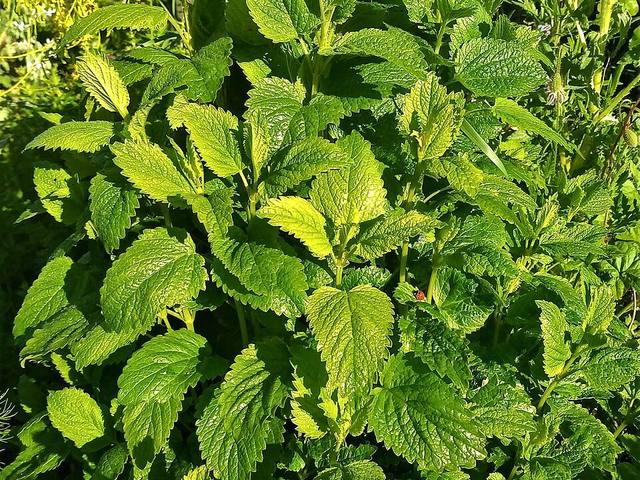
Lemon-scented leaves for an evening tea and a magnet for bees; shear it before it seeds itself about.
Hardiness: zones 4 to 9
Light: part shade
Size: about 2 ft tall, 2 ft wide
Harvest: May to September
From: S. Europe and W. Asia
Here: Hardy in the Lake Erie shore climate (zone 6b to 7a), so it can live outdoors in the ground.
Good for: food, pollinators, traditional use.
Native to: Mediterranean, Caucasus. Hardy in zones 4 to 9.
The story
Lemon balm was planted by beekeepers in ancient Greece and Rome to keep swarms near the hive; its Latin name means honey bee. Monastery gardens grew it for a cordial.
Planting
Sun or part shade and any soil.
Growing
Cut it back hard after flowering for fresh growth and to stop it seeding.
Harvest and use
Pick leaves before the flowers open. Use fresh for tea, in fruit salads and with fish; it loses scent when dried.
What to watch for
It self-sows widely if allowed to seed. Powdery mildew in dry weather.
Safety
Medicinal uses here are shared as history, not advice. Kitchen amounts are fine for most people, but teas, tinctures and supplements can interact with medicines and aren't safe for everyone, especially in pregnancy, while breastfeeding, for children, or with liver or kidney problems. Ask a doctor or pharmacist before taking any plant as medicine.
See if Lemon balm fits your yard
Free planner: enter your ZIP for frost dates, climate fit and a sowing calendar. No account, no ads, no tracking cookies.
More perennial vegetables, greens and herbs
General guidance, not professional advice. Conditions vary by yard and year; for local specifics ask your county extension office. Never eat a wild plant you cannot identify with certainty. Traditional uses are shared as history, not medical advice. © 2026 Sean Priest · Irie Orchard. Terms & credits · Privacy · Home