Mamey apple
Mammea americana
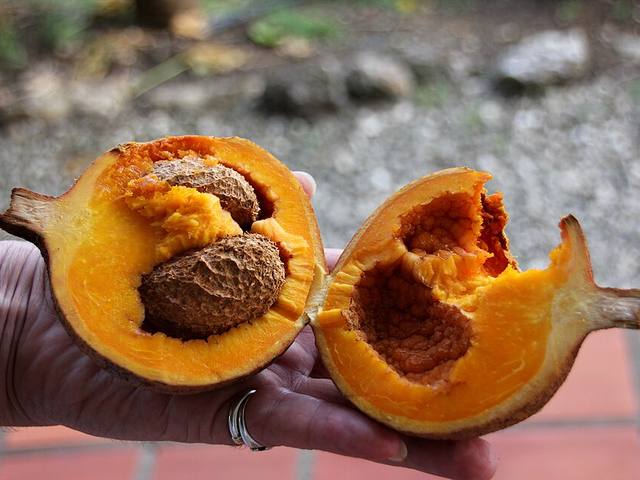
A glossy Caribbean shade tree with apricot-flavored fruit the size of a softball.
Hardiness: zones 10 to 12
Light: full sun
Size: about 60 ft tall, 35 ft wide
Harvest: May to August
From: West Indies and northern South America
Here: Too tender to overwinter outdoors on the Lake Erie shore (zone 6b to 7a): grow it in a pot and bring it in, or treat it as an annual.
Good for: food, wildlife.
Native to: Mexico, Central America & the Caribbean, Tropical South America. Hardy in zones 10 to 12.
The story
The mamey apple is the fruit Columbus's crew met in the Caribbean, where the Taíno had long grown it; mamey is their word. The tree is so handsome it lines streets from Havana to San Juan.
Planting
Full sun and deep, rich, well-drained soil in a frost-free climate. Give it room.
Growing
Water young trees well. Seedlings take six to ten years to bear, and some trees are male only, so grafted trees are the safer buy.
Harvest and use
Pick when a scratch of the russet skin shows yellow, not green. Peel off the skin and the bitter inner membrane; the firm flesh is eaten fresh, stewed or made into a thick preserve.
What to watch for
Any frost. Peel carefully: the skin, membrane and seed are bitter and should not be eaten.
See if Mamey apple fits your yard
Free planner: enter your ZIP for frost dates, climate fit and a sowing calendar. No account, no ads, no tracking cookies.
More tropical and subtropical food plants
- Stinking toe (West Indian locust)
- Chiuri (Indian butter tree)
- Timla (Roxburgh fig)
- Kakadu plum (gubinge)
- Lemon aspen
- Aguaje (moriche palm)
General guidance, not professional advice. Conditions vary by yard and year; for local specifics ask your county extension office. Never eat a wild plant you cannot identify with certainty. Traditional uses are shared as history, not medical advice. © 2026 Sean Priest · Irie Orchard. Terms & credits · Privacy · Home