Stinking toe (West Indian locust)
Hymenaea courbaril
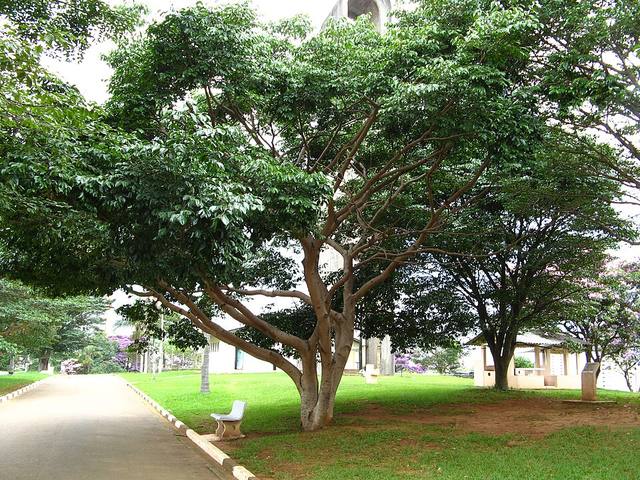
Pods that smell like feet and taste like sweet powdered milk; a childhood dare across the Caribbean.
Hardiness: zones 10 to 12
Light: full sun
Size: about 80 ft tall, 50 ft wide
Harvest: January to April
From: Southern Mexico and the Caribbean to Brazil
Drought-hardy once established
Here: Too tender to overwinter outdoors on the Lake Erie shore (zone 6b to 7a): grow it in a pot and bring it in, or treat it as an annual.
Good for: food, wildlife.
Native to: Mexico, Central America & the Caribbean, Tropical South America. Hardy in zones 10 to 12.
The story
Stinking toe is named with complete honesty: the fat brown pod looks like a big toe and smells like one. Inside is a dry, pale powder that tastes of sweet malted milk. Daring a friend to eat it is a childhood rite from Jamaica to Brazil. The tree also bleeds a resin that hardens into a kind of amber.
Planting
Full sun and deep soil in a frost-free climate. It is a forest giant and needs the space of one.
Growing
Water to establish. It is slow, drought-hardy and long-lived.
Harvest and use
Crack fallen pods with a hammer. Eat the powder as it is, or blend it with milk and sugar into a drink.
What to watch for
Falling pods are hard and heavy. Not a tree for a small yard.
See if Stinking toe (West Indian locust) fits your yard
Free planner: enter your ZIP for frost dates, climate fit and a sowing calendar. No account, no ads, no tracking cookies.
More tropical and subtropical food plants
- Chiuri (Indian butter tree)
- Timla (Roxburgh fig)
- Kakadu plum (gubinge)
- Lemon aspen
- Aguaje (moriche palm)
- Nipa palm (golpata)
General guidance, not professional advice. Conditions vary by yard and year; for local specifics ask your county extension office. Never eat a wild plant you cannot identify with certainty. Traditional uses are shared as history, not medical advice. © 2026 Sean Priest · Irie Orchard. Terms & credits · Privacy · Home