Oats
Avena sativa
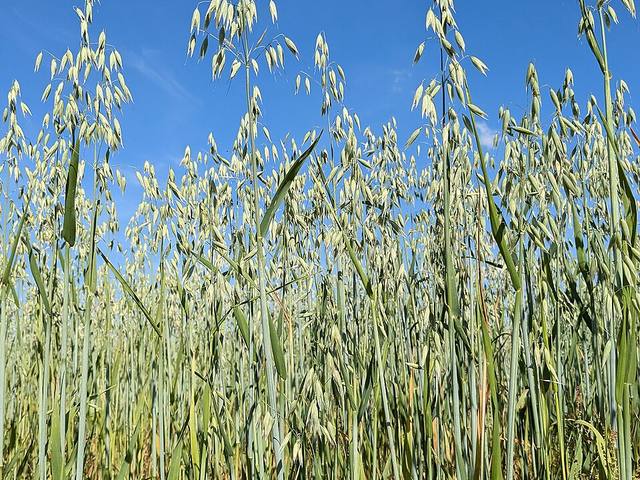
The grain of cool, damp summers and a fine winter-killed cover crop; hull-less kinds are easiest at home.
Hardiness: zones 2 to 10
Light: full sun
Size: about 4 ft tall, 0.5 ft wide
Harvest: July to August
From: Fertile Crescent, then northern Europe
Here: Hardy in the Lake Erie shore climate (zone 6b to 7a), so it can live outdoors in the ground.
Good for: food, mulch and biomass.
Native to: Temperate Europe, Northern Europe & the taiga. Hardy in zones 2 to 10.
The story
Oats began as a weed in fields of wheat and barley and became a crop of their own where summers were too cool and wet for the others. They fed the people and horses of Scotland, Ireland and Scandinavia for two thousand years.
Planting
Full sun and ordinary soil. Sow in early spring, or in late summer as a cover crop that frost will kill.
Growing
They need little beyond rain. Hull-less varieties save you the work of threshing off a tight husk.
Harvest and use
Cut when the heads turn gold and the grain dents under a thumbnail. Dry the sheaves, thresh, winnow, and roll or cook the grain whole.
What to watch for
Tall plants fall over in rich soil. Birds find the ripening heads.
See if Oats fits your yard
Free planner: enter your ZIP for frost dates, climate fit and a sowing calendar. No account, no ads, no tracking cookies.
More annual vegetables, herbs and grains
General guidance, not professional advice. Conditions vary by yard and year; for local specifics ask your county extension office. Never eat a wild plant you cannot identify with certainty. Traditional uses are shared as history, not medical advice. © 2026 Sean Priest · Irie Orchard. Terms & credits · Privacy · Home