African oil palm
Elaeis guineensis
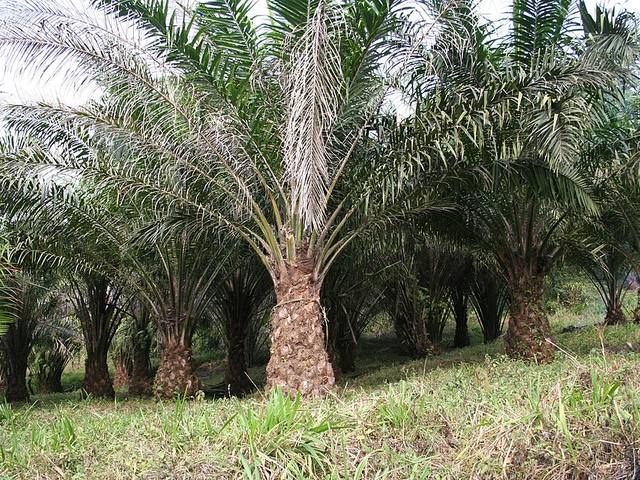
Red palm oil and palm-nut soup are West African staples; best grown in its homeland, not cleared forest.
Hardiness: zones 10 to 12
Light: full sun
Size: about 50 ft tall, 25 ft wide
Harvest: year-round
From: West and Central Africa
Here: Too tender to overwinter outdoors on the Lake Erie shore (zone 6b to 7a): grow it in a pot and bring it in, or treat it as an annual.
Good for: food.
Native to: West & Central African forests, African savannas & tropics. Hardy in zones 10 to 12.
The story
The oil palm has fed West Africa for at least 5,000 years. Red palm oil, palm-nut soup (banga) and palm wine are part of daily life from Senegal to Congo, and the palm travelled to Brazil, where dendê oil flavours Bahian cooking. Huge plantations in Southeast Asia now clear rainforest for it.
Planting
Full sun, deep moist soil, steady heat and rain; frost-free tropics only. Plant a seedling at the start of the wet season.
Growing
Water and mulch young palms; they bear in 3 to 4 years and for decades.
Harvest and use
Cut ripe orange-red bunches; boil and pound the fruit for red palm oil. Palm-kernel oil comes from the nut inside.
What to watch for
Choose oil from small farms or certified sources to avoid forest clearing.
See if African oil palm fits your yard
Free planner: enter your ZIP for frost dates, climate fit and a sowing calendar. No account, no ads, no tracking cookies.
More tropical and subtropical food plants
General guidance, not professional advice. Conditions vary by yard and year; for local specifics ask your county extension office. Never eat a wild plant you cannot identify with certainty. Traditional uses are shared as history, not medical advice. © 2026 Sean Priest · Irie Orchard. Terms & credits · Privacy · Home